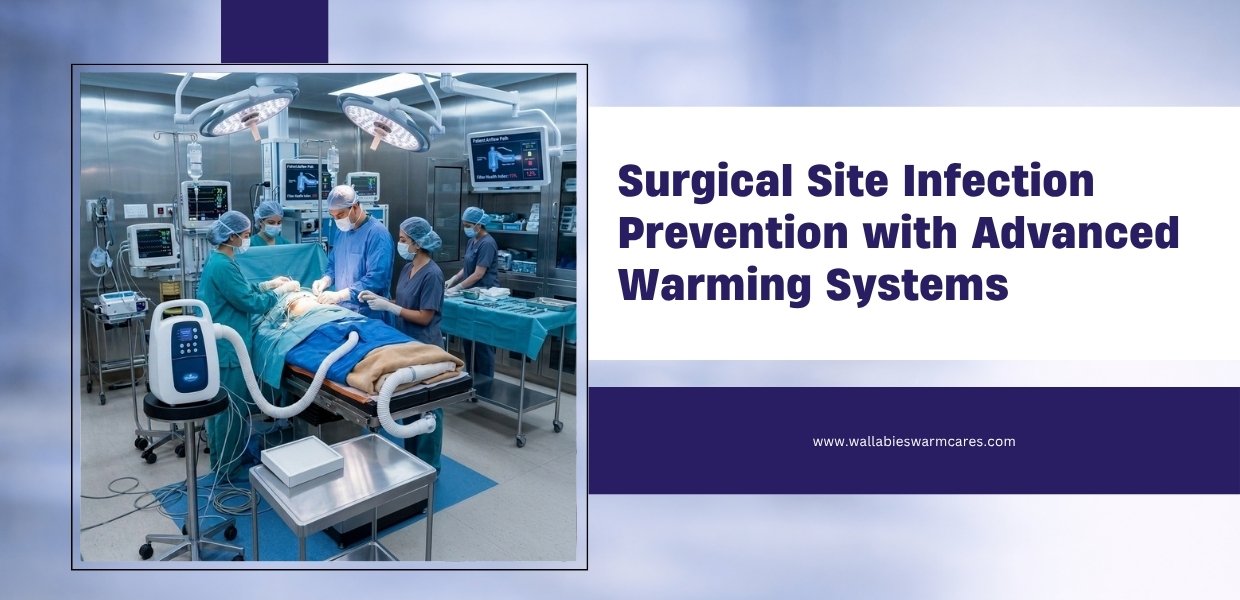
Every year, millions of patients undergo surgery and millions are unknowingly at risk of a complication that has nothing to do with their diagnosis. The threat is unintended hypothermia, and it begins the moment a patient is wheeled into a cold operating theatre. A body warmer machine is the clinical solution that stands between a patient and this preventable risk. Designed to maintain safe core body temperature before, during, and after procedures, the body warmer machine also called a patient warming system is now recognised as an essential standard of care in modern hospitals worldwide.
In this guide, we cover everything clinical and procurement teams need to know: how body warmer machines work, the different types available, their proven clinical benefits, what to look for when choosing one, and why the right partner matters.
What Is a Body Warmer Machine?
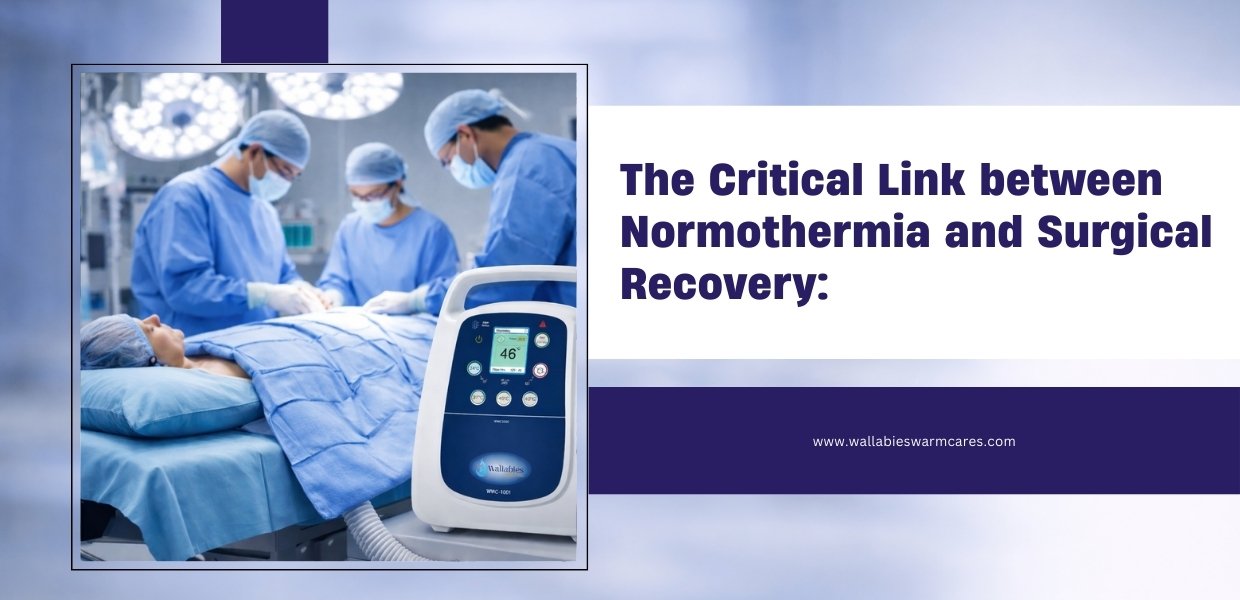
A body warmer machine is a medical device that actively delivers controlled heat to a patient’s body surface to prevent or reverse heat loss during clinical procedures. Unlike passive measures such as cotton blankets, an active patient warming device generates and delivers warmth, maintaining the patient’s core temperature within the clinically safe normothermic range of 36°C to 37.5°C.
Most commonly used in the perioperative setting, body warmer machines are deployed at every stage of the surgical pathway:
- Pre-operatively – to prevent redistribution hypothermia before anaesthesia induction
- Intraoperatively – to counteract heat loss throughout surgery
- Post-operatively – in recovery units and the ICU to rewarm and stabilise the patient
Beyond the OR, body warmer machines are also used in emergency departments for trauma and hypothermic patients, in neonatal units for newborns, and in labour and delivery suites for maternal care.
Why Every Hospital Needs a Body Warmer Machine
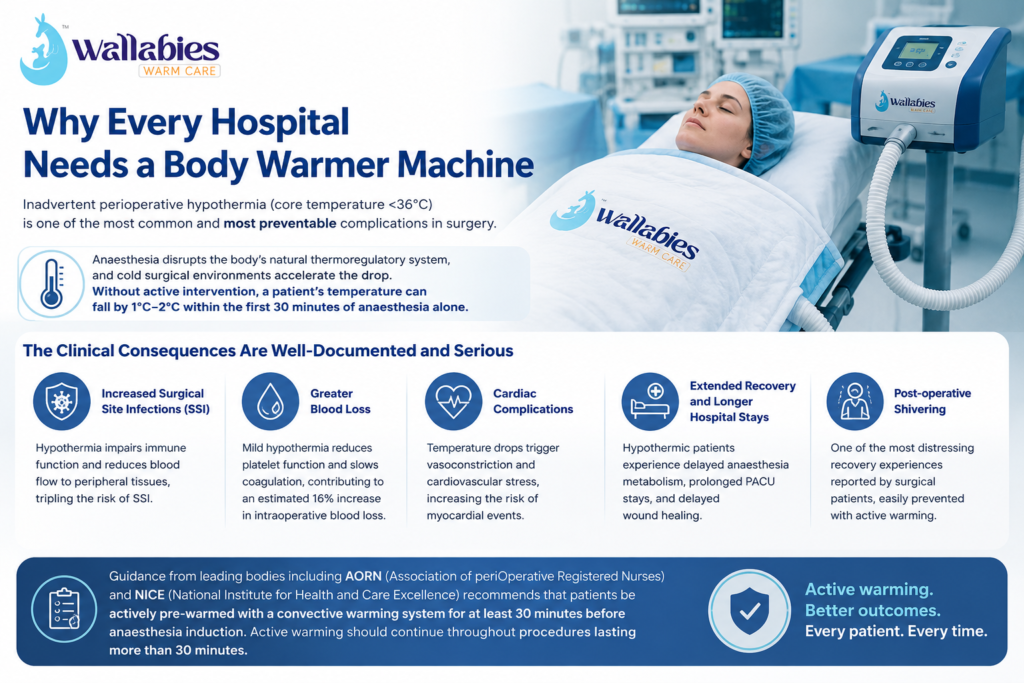
Inadvertent perioperative hypothermia a core temperature below 36°C is one of the most common and most preventable complications in surgery. Anaesthesia disrupts the body’s natural thermoregulatory system, and cold surgical environments accelerate the drop. Without active intervention, a patient’s temperature can fall by 1°C-2°C within the first 30 minutes of anaesthesia alone.
The clinical consequences are well-documented and serious:
- Increased surgical site infections (SSI): Hypothermia impairs immune function and reduces blood flow to peripheral tissues, tripling the risk of SSI.
- Greater blood loss: Mild hypothermia reduces platelet function and slows coagulation, contributing to an estimated 16% increase in intraoperative blood loss.
- Cardiac complications: Temperature drops trigger vasoconstriction and cardiovascular stress, increasing the risk of myocardial events.
- Extended recovery and longer hospital stays: Hypothermic patients experience delayed anaesthesia metabolism, prolonged PACU stays, and delayed wound healing.
- Post-operative shivering: One of the most distressing recovery experiences reported by surgical patients, easily prevented with active warming.
Guidance from leading bodies, including AORN (Association of periOperative Registered Nurses) and NICE (National Institute for Health and Care Excellence), recommends that patients be actively pre-warmed with a convective warming system for at least 30 minutes before anaesthesia induction. Active warming should continue throughout procedures lasting more than 30 minutes.
How Does a Body Warmer Machine Work?
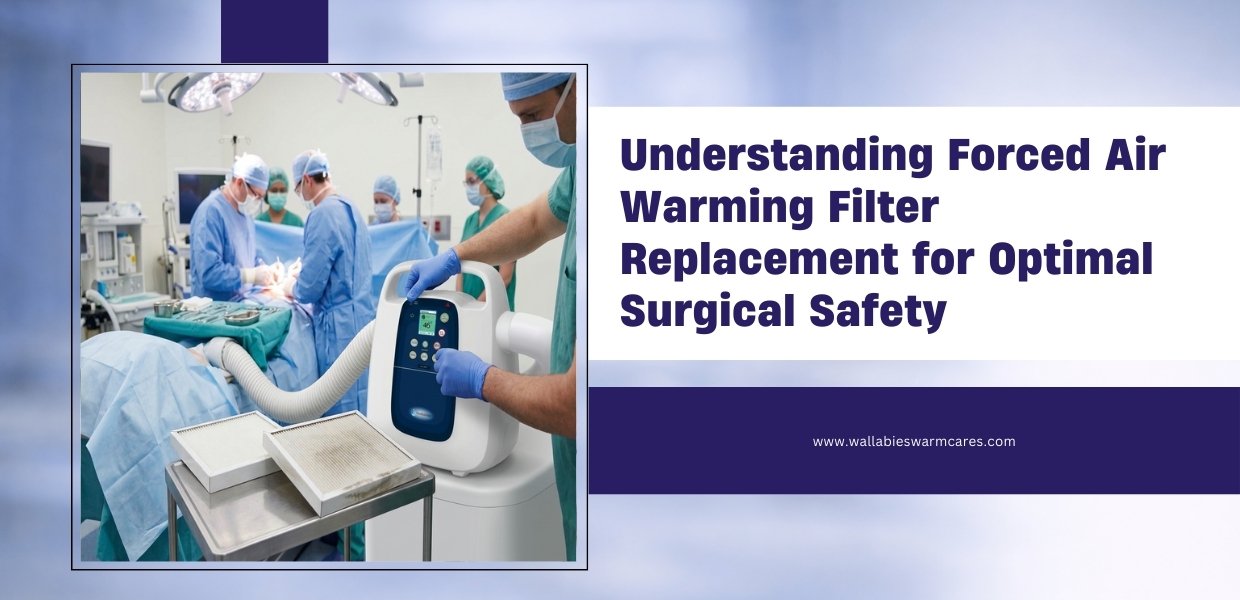
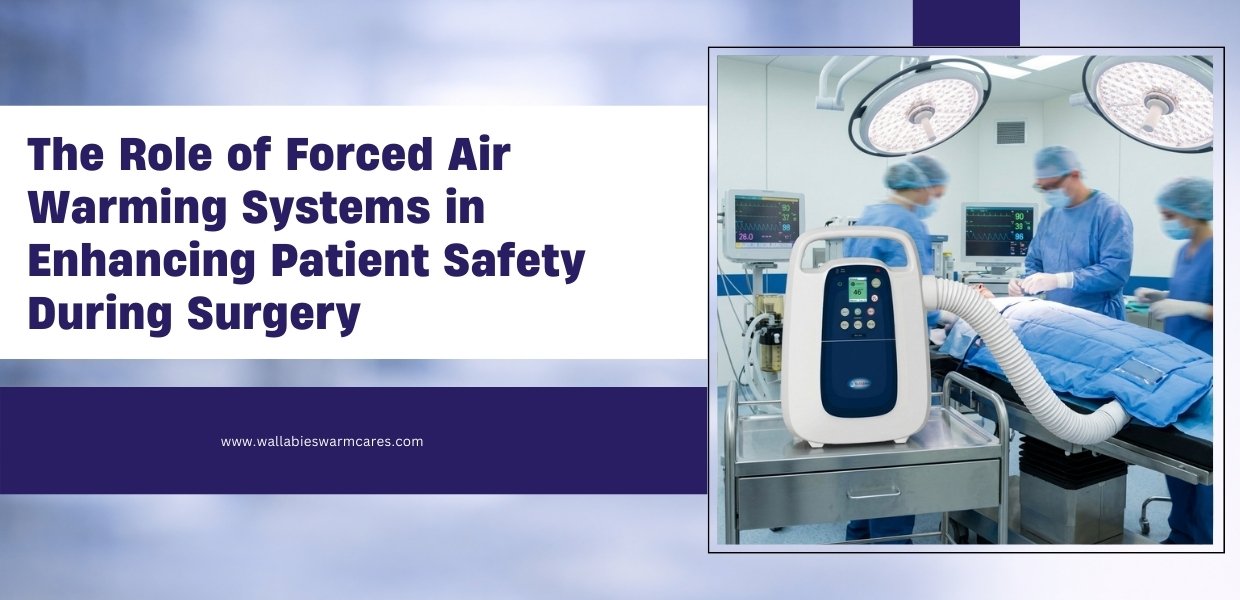
The most widely used type of body warmer machine operates on the principle of forced air warming (FAW), also called convective warming. Here is exactly how it works:
- Air intake: The machine draws ambient room air through a built-in filtration system.
- Heating: The filtered air is rapidly heated to a clinically controlled temperature, typically between 32°C and 43°C, regulated by precision internal sensors.
- Delivery: Warm air is pushed through a flexible hose into a single-use medical warming blanket placed over the patient.
- Distribution: Thousands of micro-perforations in the blanket distribute warm air evenly across the patient’s body surface.
- Monitoring: Clinical staff adjust and monitor output temperature in real time via a digital control panel.
This convective warming system approach is clinically superior to passive warming methods because it actively replaces the heat patients continuously lose to the cold OR environment rather than simply slowing the rate of loss.
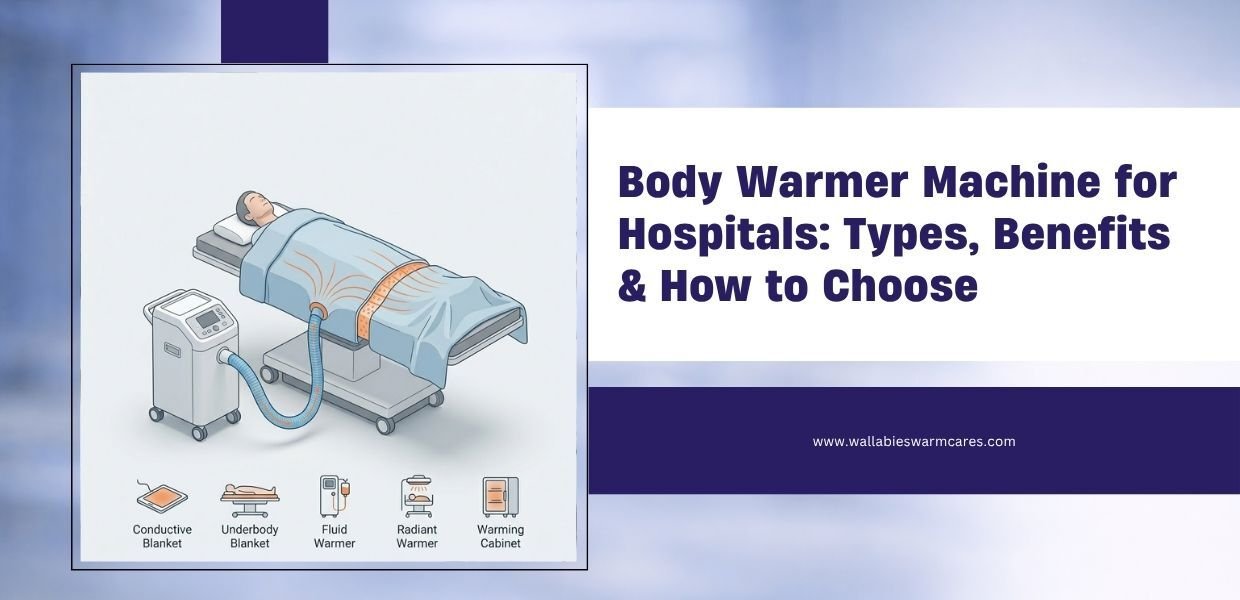
Types of Body Warmer Machines
Understanding the different types of body warmer machines helps hospitals choose the most appropriate solution for each clinical environment.
1. Forced Air Warming Machines (Convective)
The gold standard in perioperative care. A forced air warming machine delivers precisely heated air through a disposable warming blanket placed over the patient. Suitable for nearly all surgical specialties, patient ages, and clinical positions. Clinically validated and recommended by NICE and AORN guidelines.
2. Conductive Warming Systems
Electrically heated blankets, pads, or mattresses that transfer warmth through direct contact. These are used in specific surgical positions where over-body access is limited, such as prone or lateral procedures.
3. Underbody Warming Systems
Warming blankets placed beneath the patient on the operating table, delivering heat from below. Often combined with a surgical body warmer above for full 360-degree thermal coverage in high-risk or lengthy procedures.
4. Blood and Fluid Warmers
These devices heat intravenous fluids and blood products before they are administered. Essential in trauma, cardiac surgery, and major abdominal procedures where large volumes of cold fluids would otherwise cause a significant drop in core temperature. The Wallabies Warm Care Blood and Fluid Warmer is designed for precise temperature control during fluid administration.
5. Radiant Warmers
Overhead infrared heat sources primarily used in neonatal intensive care units (NICUs) for newborns. Provide warmth while allowing full clinical access for procedures such as resuscitation.
6. Warming Cabinets
Used to pre-warm blankets and IV fluid bags before patient contact. A standard feature in pre-operative areas and OR corridors to support comfort and pre-warming protocols.
Key Features to Look for in a Body Warmer Machine
When procuring a patient warming system for your facility, evaluate these critical criteria:
- Temperature range and precision: Look for a reliable digital control with a full range of settings and built-in safety cutoffs that prevent overheating.
- Blanket compatibility: Ensure the machine supports a full portfolio of blanket types upper body, lower body, full body, paediatric, underbody, and specialty so it can serve multiple departments.
- Low noise operation: OR environments require quiet conditions. A well-engineered normothermia device should operate below 52 dB(A).
- Ease of use: Intuitive digital controls and simple setup allow OR and nursing staff to operate the device efficiently without disrupting workflows.
- ISO 13485 certification: This certification confirms the manufacturer meets quality management standards specific to medical device production.
- IEC 60601-1 compliance: The international standard for general electrical safety in medical equipment.
- Portability: A compact unit with smooth-rolling casters enables flexible deployment across departments.
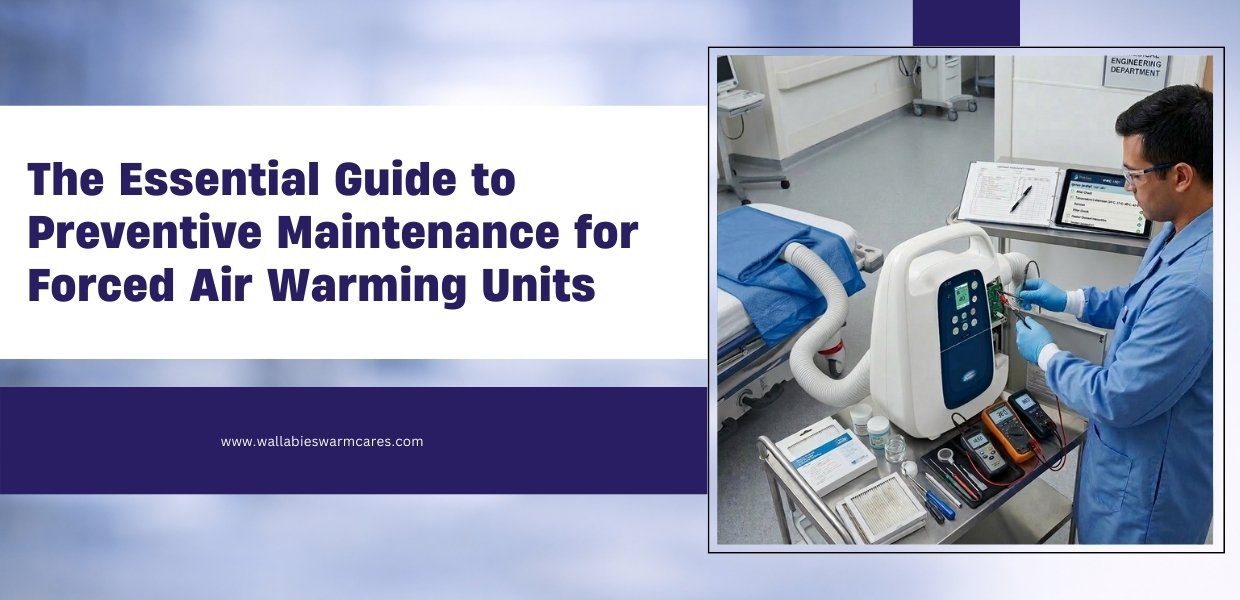
- Filtration and hygiene: Easy-to-replace air filters and sealed intake systems ensure contamination-free airflow in all clinical settings.
Wallabies Warm Care: Your Trusted Body Warmer Machine Partner
At Wallabies Warm Care, we manufacture ISO 13485-certified body warmer machines and compatible warming blankets for hospitals, surgical centres, and distributors worldwide. Based in Pune, India, we are a dedicated manufacturer of forced air patient warming systems built for consistent, clinically reliable performance.
Our product range supports complete perioperative thermal management from the pre-operative bay through the OR, ICU, and recovery room.
Forced Air Patient Warming Machine
Our flagship body warmer machine is engineered for controlled convective warming in operating rooms, ICUs, and recovery areas. Designed for ease of use and clinical efficiency, it integrates smoothly into existing hospital workflows with minimal training. Reliable performance, low noise operation, and a compact footprint make it a practical choice for daily use across departments.
Warming Blankets
Our range of medical warming blankets is designed for uniform warm air distribution and full patient comfort during procedures. Multiple configurations upper body, lower body, full body, paediatric, underbody allow use across all surgical specialties.
Blood and Fluid Warmer
Designed to maintain precise fluid temperature during IV and blood administration, our fluid warmer supports thermal management in high-acuity environments where large infusion volumes are involved.
Explore our full range at wallabieswarmcares.com or contact our team to request detailed product specifications for your facility.
Frequently Asked Questions About Body Warmer Machines
What is a body warmer machine used for in hospitals?
A body warmer machine is used to maintain or restore a patient’s core body temperature during surgery, recovery, and critical care. It prevents inadvertent perioperative hypothermia a core temperature drop below 36°C which can significantly increase the risk of surgical site infections, blood loss, cardiac complications, and prolonged recovery.
How does a forced air body warmer machine work?
A forced air warming machine heats filtered ambient air and delivers it through a flexible hose into a disposable warming blanket covering the patient. The blanket distributes warm air evenly across the body surface through micro-perforations, actively maintaining normothermia throughout the procedure.
What is the difference between a body warmer machine and a medical warming blanket?
A body warmer machine (also called a patient warming device) is the powered unit that heats and delivers warm air. A medical warming blanket is the single-use disposable blanket connected to the machine that distributes the warm air to the patient. Both components are required for effective forced air warming they work as a system.
Which departments in a hospital use a body warmer machine?
Body warmer machines are used in operating theatres, ICUs, post-anaesthesia care units (PACU), emergency departments, neonatal intensive care units, and labour and delivery suites. Any clinical environment where patients are at risk of heat loss benefits from an active patient warming system.
How long should a patient be pre-warmed before surgery?
AORN guidelines recommend active perioperative warming with a convective warming system for at least 30 minutes before anaesthesia induction. This pre-warming period reduces the ‘redistribution hypothermia’ that occurs when anaesthesia causes core body heat to shift to peripheral tissues.
What certifications should a body warmer machine have?
Look for ISO 13485 certification (medical device quality management) and compliance with IEC 60601-1 (general electrical safety for medical devices) and IEC 60601-1-2 (electromagnetic compatibility). These standards confirm the device is manufactured and tested to internationally recognised healthcare requirements.
Can a body warmer machine be used for paediatric and neonatal patients?
Yes. When the appropriate paediatric or neonatal warming blanket is used, a body warmer machine is safe and effective for young patients. Neonates and children are particularly vulnerable to heat loss due to their higher body surface area to volume ratio, making active patient warming even more important in paediatric and neonatal care settings.
Conclusion
A body warmer machine is not optional equipment it is a clinical imperative. Preventing inadvertent hypothermia protects patients from infection, excessive blood loss, cardiac complications, and prolonged recovery. Active patient warming systems save time, reduce complications, and improve surgical outcomes at every stage of the perioperative journey.
Choosing the right body warmer machine for your hospital means evaluating clinical performance, quality certifications, blanket compatibility, and the reliability of your supply partner. Wallabies Warm Care delivers ISO 13485-certified patient warming solutions to hospitals and distributors worldwide built for consistent performance, designed for clinical ease of use.