In any operating theatre, ICU, or emergency department, every litre of cold intravenous fluid or refrigerated blood product administered without warming carries a clinical risk. Intravenous fluid warming is not a secondary consideration it is a core component of patient temperature management. A fluid warmer is the medical device designed specifically to address this risk, heating IV fluids and blood products to near body temperature before they reach the patient, preventing hypothermia and protecting clinical outcomes.
In this complete guide, we cover everything clinical teams and hospital procurement managers need to know about fluid warmers: what they are, why cold fluids are dangerous, how they work, the types available, key features to evaluate, and how Wallabies Warm Care supports complete perioperative fluid management.
What Is a Fluid Warmer?
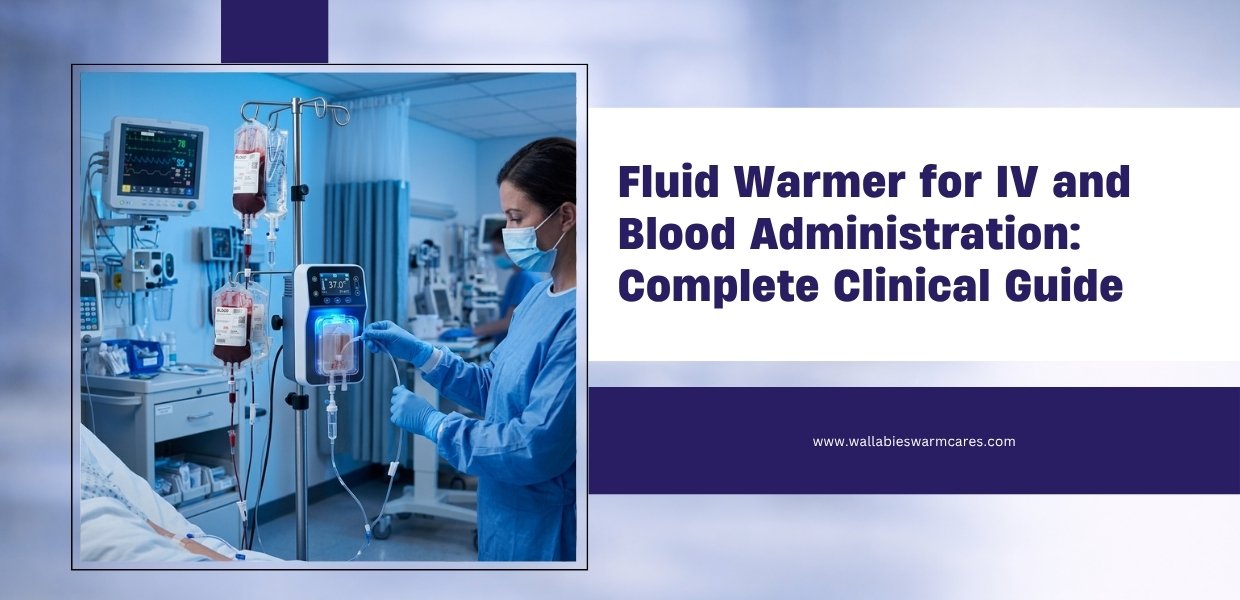
A fluid warmer also called an IV fluid warmer or blood warmer is a medical device used in hospitals to heat intravenous fluids, blood products, and other parenteral solutions to body temperature before or during administration to a patient. Its primary clinical purpose is to prevent hypothermia caused by the infusion of cold fluids, particularly during surgery, trauma care, and intensive care.
Fluid warmers are FDA-regulated medical devices (product code LGZ) requiring 510(k) clearance in the United States, and must meet international standards including ISO 80601-2-37 for percutaneous intravenous fluid warmers. They are available as two primary categories: devices that warm fluids before use (such as warming cabinets) and devices that actively warm fluids during administration (in-line warmers).
Fluid warmers are used across a wide range of clinical environments, including:
- Operating Theatres – during major and prolonged surgical procedures
- Intensive Care Units (ICU) – for critically ill patients receiving continuous IV therapy
- Emergency Departments – for trauma patients requiring rapid, large-volume resuscitation
- Post-Anaesthesia Care Units (PACU) – during patient recovery from anaesthesia
- Neonatal and Paediatric Units – for vulnerable patients with limited thermoregulatory reserve
Why Do Cold IV Fluids Cause Hypothermia?
Blood products are stored refrigerated at approximately 4°C. Room-temperature IV crystalloid solutions are typically stored at around 22°C. When administered directly without warming, these fluids enter the patient’s bloodstream significantly below core body temperature (37°C), causing conductive heat loss from the inside out.
The clinical impact is significant: administering just one unit of refrigerated blood or one litre of room-temperature crystalloid can reduce mean body temperature by approximately 0.25°C in an adult patient. In major surgery or trauma where litres of fluid may be required rapidly, the cumulative effect can cause severe perioperative hypothermia a core temperature below 36°C with serious downstream consequences.
The documented clinical risks of hypothermia caused by cold IV fluid administration include:
- Increased surgical site infection (SSI): Hypothermia reduces peripheral blood flow and impairs the immune response, tripling SSI risk.
- Coagulopathy: Cold temperatures impair platelet function and slow the clotting cascade, increasing blood loss and transfusion requirements.
- Cardiac complications: Hypothermia triggers vasoconstriction and cardiovascular stress, raising the risk of arrhythmias and myocardial events.
- The Triad of Death: In trauma patients, hypothermia combined with acidosis and coagulopathy creates a life-threatening cycle that is extremely difficult to reverse once established.
- Extended recovery times: Hypothermic patients experience delayed anaesthesia metabolism, prolonged PACU stays, and slower post-operative wound healing.
Active hypothermia prevention IV using a dedicated fluid warming device is the evidence-based intervention that breaks this chain before it begins.
How Does a Fluid Warmer Work?
The working principle of a fluid warmer is controlled heat transfer. The device heats a sterile element whether a dry heat plate, countercurrent water circuit, or coaxial warming tube and passes the IV tubing or blood set through or against this element as fluid flows towards the patient.
Here is how a modern in-line fluid warmer works step by step:
- Fluid enters the warming set: The IV bag or blood product connects to a disposable warming set (tubing with an integrated heating element or cassette).
- Heat transfer: As fluid flows through the warming set, heat is transferred to the fluid via dry heat plates, countercurrent warm water, or coaxially heated tubing.
- Temperature control: A microprocessor-controlled thermostat monitors fluid temperature in real time, maintaining output between 37°C and 42°C the clinically safe range.
- Safety monitoring: Audible and visual alarms trigger automatically if the temperature exceeds 42.5°C (to prevent hemolysis in blood products) or drops below the set threshold.
- Delivery to patient: Warmed fluid is delivered directly to the IV access site, minimising heat loss along the tubing run between device and patient.
It is critical that blood products never exceed 42°C during warming, as overheating causes hemolysis the breakdown of red blood cells which can be life-threatening. Modern blood warmers incorporate automatic power cutoff mechanisms to prevent this.
Types of Fluid Warmers
Understanding the different types of fluid warming devices helps clinical and procurement teams select the right solution for each department and clinical scenario.
1. In-Line Dry Heat Fluid Warmers
The most widely used type in modern operating theatres and ICUs. A dry heat plate or element warms the fluid as it passes through a disposable cassette inserted directly into the IV line. Dry heat systems are preferred by many hospitals as they carry no risk of cross-contamination associated with water bath systems no liquid means no bacterial growth. Effective across a wide range of flow rates.
2. Countercurrent Water Bath Warmers
Fluid passes through tubing submerged in or surrounded by a heated water circuit. Highly effective for low-flow warming scenarios. However, water bath systems require regular cleaning and maintenance to prevent bacterial contamination (particularly Pseudomonas) and are being phased out in favour of dry heat technology in many modern clinical protocols.
3. In-Line Coaxial Tube Warmers
A coaxial design places the IV tubing inside a heated outer tube, warming the fluid along the full length of the set. These devices are particularly effective for low flow rate warming (such as neonatal IV therapy) where fluid must be warmed even at very slow infusion rates. The heated tubing close to the catheter insertion point minimises post-warming heat loss.
4. High-Flow Rapid Infusion Warmers
Designed for massive transfusion protocols (MTP) and major trauma resuscitation where fluids must be administered rapidly at high volumes. These devices combine warming technology with pressure infusion capability and can deliver warmed fluid at rates up to 1,500 mL/min or more through large-bore IV access. Essential in Level 1 trauma centres and major surgical units.
5. Warming Cabinets for IV Fluids
Heated cabinets that pre-warm IV fluid bags before they are connected to the patient. Unlike in-line warmers, these do not warm fluid during infusion they provide a ready supply of pre-warmed crystalloid solutions for routine use. Typically set to 37°C–40°C, and fluid bags should not be stored in warming cabinets for more than 14–28 days (per manufacturer guidance) to comply with clinical regulations.
Clinical Use Cases for Fluid Warmers
Active intravenous fluid warming is clinically indicated whenever large or rapid fluid volumes are administered, or when the patient is at heightened risk of hypothermia. Key clinical scenarios include:
- Major surgery: Any procedure expected to last more than 30 minutes where significant fluid replacement is required cardiac, abdominal, orthopaedic, or vascular surgery.
- Trauma resuscitation: Trauma patients often require rapid, large-volume blood and fluid replacement. Without active warming, cold fluids can quickly trigger the triad of death. Fluid warmers are a frontline component of every major trauma protocol.
- Massive blood transfusion: When multiple units of refrigerated blood products must be administered rapidly, a high-flow blood warmer is essential to prevent transfusion-induced hypothermia and coagulopathy.
- Intensive care: ICU patients receiving continuous IV therapy benefit from fluid warming to maintain normothermia during long-term critical care, particularly post-surgery or following major injury.
- Paediatric and neonatal care: Newborns and young children are highly susceptible to heat loss from cold IV fluids due to their high surface-area-to-volume ratio. Low-flow, precise fluid warming is critical in NICU and paediatric settings.
- Emergency department: Patients arriving in hypothermia (drowning, exposure, shock) require both active surface warming and IV fluid warming as part of a comprehensive rewarming protocol.
Key Features to Look for in a Fluid Warmer
When procuring a fluid warmer or blood warmer for your hospital, evaluate the following critical criteria:
- Temperature range and precision: The device should maintain output fluid temperature between 37°C and 42°C with microprocessor-controlled accuracy. Must include automatic cutoff above 42.5°C to protect blood products from hemolysis.
- Alarm system: Audible and visual alarms must be present for over-temperature, under-temperature, and air-in-line detection. Automatic power cutoff is a non-negotiable safety requirement for clinical compliance.
- Flow rate range: Confirm the device handles both low-flow (KVO Keep Vein Open) rates for routine infusions and high-flow rates required in trauma or massive transfusion protocols. Verify that warming performance is maintained at both extremes.
- Dry heat technology: Where possible, specify dry heat warming over water bath systems. Dry heat provides a sterile fluid path, eliminates cross-contamination risk, and reduces maintenance burden.
- Warming set compatibility and cost: Assess whether the disposable warming sets are proprietary or universal. Consider cost-per-use over the device’s lifetime not just the purchase price.
- Air detection: Integrated air-in-line detection with automatic flow interruption is a critical safety feature, particularly for high-flow applications where air embolism risk is elevated.
- Regulatory compliance: Look for ISO 80601-2-37 compliance and IEC 60601-1 (general electrical safety). ISO 13485 certification at the manufacturer level confirms quality management standards specific to medical device production.
- Portability and mounting: In-line warmers should be compact and IV pole-mountable, allowing flexible deployment across the OR, ICU, ED, and PACU without requiring fixed installation.
Wallabies Warm Care: Complete Perioperative Temperature Management
At Wallabies Warm Care, we are an ISO 13485-certified manufacturer of patient warming systems serving hospitals and distributors worldwide from our facility in Pune, India. Our product range is designed to deliver comprehensive perioperative temperature management covering both surface warming and blood and IV fluid warming solutions.
Blood and Fluid Warmer
Our blood and fluid warmer is designed for precise temperature management during IV and blood product administration in operating rooms, ICUs, and emergency departments. Engineered for reliable performance in high-acuity clinical environments, it supports the full spectrum of perioperative fluid management from routine IV infusions to high-volume resuscitation scenarios.
Forced Air Patient Warming Machine
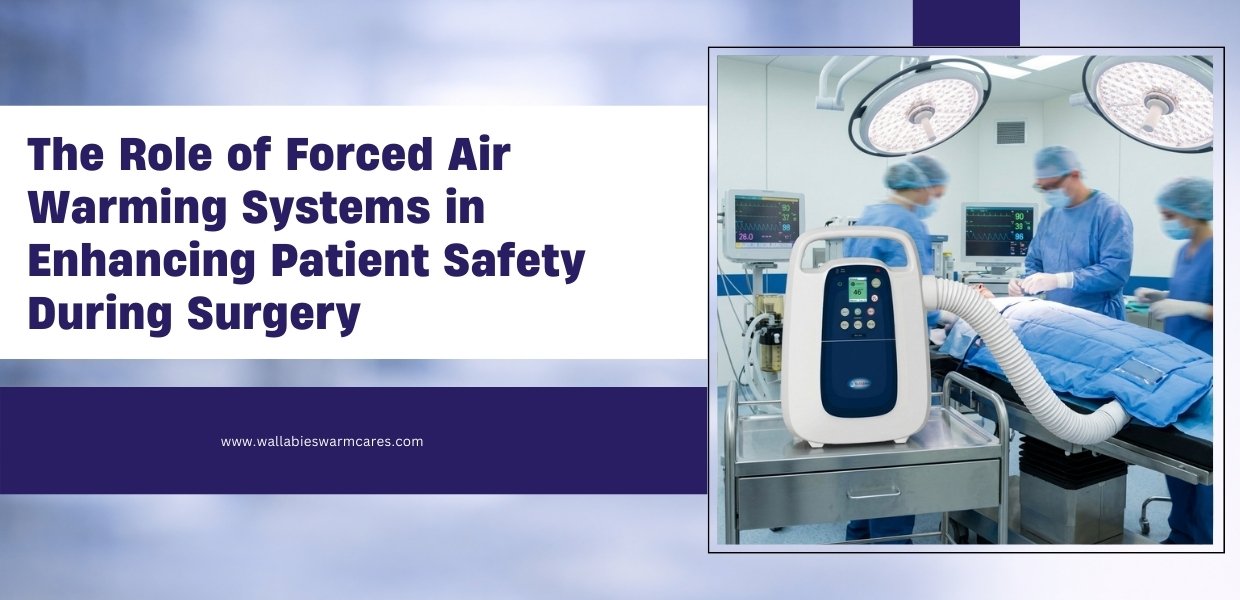
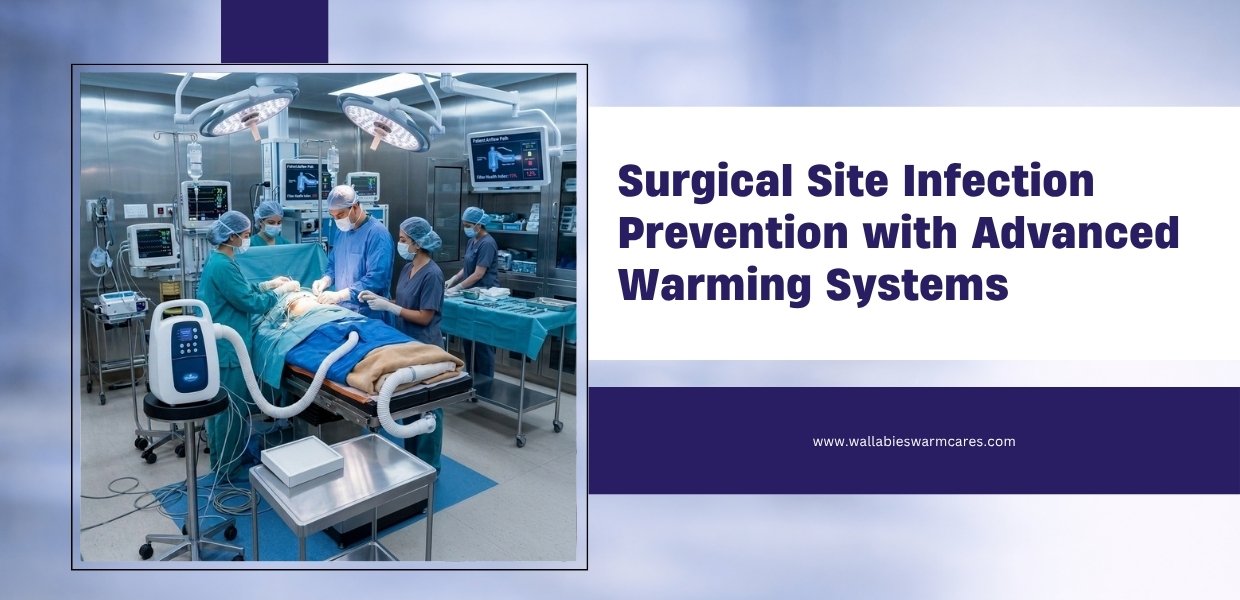
Used alongside fluid warming, our forced air patient warming machine delivers active surface warming through disposable warming blankets providing complete temperature protection from above while the fluid warmer prevents heat loss from within. Together, they form a comprehensive active warming protocol that addresses all routes of perioperative heat loss.
Warming Blankets
Our range of warming blankets including upper body, lower body, full body, and paediatric configurations integrates seamlessly with our patient warming machine to deliver consistent, even warmth across the full perioperative pathway.
For product specifications or to request information for your facility, visit wallabieswarmcares.com or contact our team directly.
Frequently Asked Questions About Fluid Warmers
What is a fluid warmer used for in a hospital?
A fluid warmer is a medical device used to heat intravenous fluids and blood products to near body temperature before or during administration to a patient. Its primary purpose is to prevent hypothermia caused by cold IV fluids a common and clinically serious complication during surgery, trauma resuscitation, and intensive care.
What temperature should a fluid warmer be set to?
Most clinical protocols require a fluid warmer to deliver fluids between 37°C and 42°C. For blood products specifically, the temperature must never exceed 42°C, as overheating above this threshold causes hemolysis the breakdown of red blood cells which can be fatal. Modern devices include automatic cutoff mechanisms to enforce this limit.
What is the difference between a fluid warmer and a blood warmer?
The terms are often used interchangeably. A blood warmer is specifically designed to warm blood products (packed red blood cells, plasma, platelets) during transfusion. A fluid warmer heats all IV fluids including crystalloids (saline, Ringer’s lactate) and colloids as well as blood products. Many modern medical fluid warmer devices are designed to handle both, and are correctly referred to as blood and IV fluid warmers.
When should a fluid warmer be used?
A fluid warmer should be used whenever fluid requirements are likely to exceed maintenance volumes, and is mandatory when blood products are administered. Clinical guidelines recommend its use in all major surgical procedures, trauma resuscitation, massive transfusion protocols, neonatal IV therapy, and for any patient at elevated risk of perioperative hypothermia.
Can a fluid warmer be used for neonates and children?
Yes. Specialised low-flow IV fluid warmers with coaxial or countercurrent warming technology are designed for paediatric and neonatal use. These devices maintain precise warming at very low flow rates typical of neonatal IV therapy. Neonates and children are at particularly high risk of IV fluid-induced hypothermia and benefit significantly from active intravenous fluid warming.
What certifications should a fluid warmer have?
Look for compliance with ISO 80601-2-37 (specific to percutaneous IV fluid warmers), IEC 60601-1 (general electrical safety for medical devices), and IEC 60601-1-2 (electromagnetic compatibility). In the USA, FDA 510(k) clearance is required. For India and international markets, ISO 13485 certification at the manufacturer level confirms medical device quality management standards are in place.
How often should a fluid warmer be serviced?
Service intervals depend on the manufacturer’s recommendations and the clinical environment. Disposable warming sets should be replaced per the manufacturer’s instructions typically after each use or procedure. The warming unit itself should undergo preventive maintenance at intervals specified in the device manual, typically every 6 -12 months, with a full biomedical safety check annually. Always follow your facility’s infection control and biomedical maintenance protocols.
Conclusion
A fluid warmer is an essential clinical device in any hospital that performs surgery, manages trauma, or cares for critically ill patients. By warming IV fluids and blood products to near body temperature before administration, it directly prevents one of the most dangerous and preventable complications in clinical care hypothermia from within.
Choosing the right IV fluid warmer or blood warmer for your facility means evaluating temperature precision, safety features, flow rate performance, dry heat technology, and the quality credentials of your supply partner. As part of a complete perioperative temperature management strategy alongside surface warming with a forced air system blood and IV fluid warming solutions from a trusted ISO 13485-certified manufacturer provide hospitals with the clinical protection their patients need at every stage of care.
Contact Wallabies Warm Care at wallabieswarmcares.com to explore our Blood and Fluid Warmer and complete patient warming range.