Patient comfort and clinical safety go hand in hand in any surgical or critical care environment. One of the simplest yet most clinically impactful tools in a hospital is the blanket warmer machine. Used daily across operating theatres, recovery rooms, ICUs, and patient wards, a hospital blanket warmer plays an essential role in preventing hypothermia, reducing complications, and ensuring patients feel safe and comfortable from arrival to recovery.
In this guide, we cover everything you need to know about blanket warmer machines what they are, how they work, their clinical benefits, the types available, and what features to look for when choosing the right solution for your facility.
What Is a Blanket Warmer Machine?
A blanket warmer machine also called a medical blanket warming cabinet or warming machine is a clinical device designed to heat blankets, linens, gowns, and in some configurations, intravenous (IV) fluids, to a safe and controlled temperature before use on patients.
Unlike passive warming methods such as layering cotton blankets, a blanket warmer machine actively and consistently maintains warmth at the correct therapeutic temperature, ready for use exactly when the clinical team needs it. The pre-warmed blanket is then placed directly on the patient to begin offsetting heat loss immediately.
Blanket warmer machines are used throughout the hospital environment, including:
- Pre-operative holding areas – to comfort patients before anaesthesia
- Operating Rooms (OR) – to reduce patient heat loss during exposure
- Post-Anaesthesia Care Units (PACU) – to rewarm patients after surgery
- Intensive Care Units (ICU) – for long-term temperature support in critical patients
- Emergency Departments – for trauma and hypothermic patients on arrival
- Neonatal and Paediatric Units – for vulnerable patients with high heat-loss sensitivity
Why Is a Blanket Warmer Machine Essential in Clinical Settings?
Inadvertent perioperative hypothermia (IPH) a core body temperature below 36°C affects more than half of all surgical patients undergoing general anaesthesia. The combination of anaesthetic agents, cold operating environments, and skin exposure makes temperature loss almost inevitable without active intervention.
The clinical consequences of hypothermia are well-documented and serious:
- Surgical Site Infections (SSI): Hypothermia reduces blood flow to peripheral tissues and impairs immune response, significantly raising SSI risk. Studies indicate hypothermic patients have substantially higher susceptibility to wound infections.
- Increased blood loss: Temperature drops impair platelet function and slow the blood coagulation process, contributing to greater intraoperative bleeding.
- Cardiac complications: Cold-induced vasoconstriction increases cardiovascular strain and raises the risk of cardiac events in vulnerable patients.
- Extended recovery and longer hospital stays: Hypothermic patients take longer to recover from anaesthesia, experience delayed wound healing, and are more likely to suffer post-operative shivering.
- Patient discomfort and anxiety: Feeling cold is one of the most common patient complaints in the perioperative setting. Pre-warmed blankets directly address this, improving the overall patient experience.
AORN (Association of periOperative Registered Nurses) guidelines recommend active perioperative warming as a standard of care for all surgical patients. A blanket warmer machine is the foundational tool that makes pre-warming accessible, reliable, and consistent at every stage of the patient journey.
How Does a Blanket Warmer Machine Work?
Most modern hospital blanket warmers use convection heating technology. Here is how the process works:
- Heating chamber: The machine’s internal heating element warms the air inside the insulated cabinet to a set temperature, typically between 40°C and 65°C depending on the clinical application.
- Convection circulation: Warm air circulates evenly throughout the cabinet interior, ensuring all items stored inside blankets, gowns, or linens reach the desired temperature uniformly.
- Temperature control: A digital thermostat and temperature display allow clinical staff to set and monitor the exact warming temperature, with safety cutoffs to prevent overheating.
- Ready for use: Once heated to the correct temperature, blankets are removed and placed directly on the patient, immediately delivering therapeutic warmth.
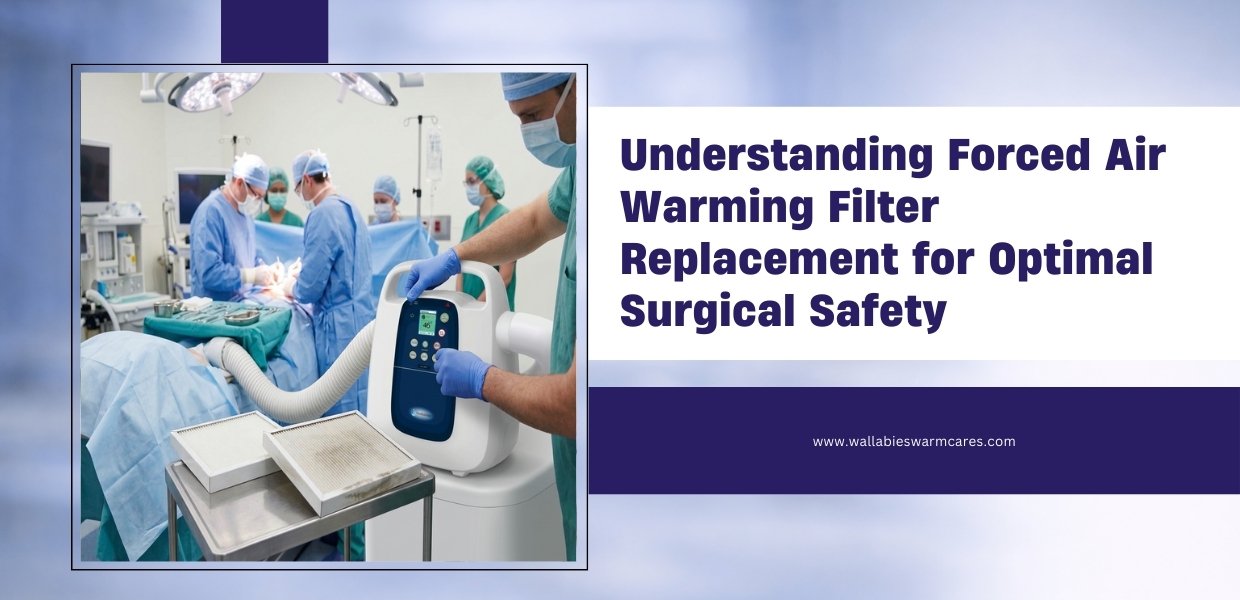
For facilities using forced air warming blankets connected to a patient warming unit, the blanket warmer machine plays a complementary role pre-warming the patient and providing comfort blankets while the active forced air warming system manages core temperature during the procedure itself.
Types of Blanket Warmer Machines
Understanding the different types of blanket warmer machines helps hospitals choose the most suitable solution for their environment and patient volume.
1. Single-Compartment Blanket Warmer Cabinet
The most common type in clinical settings. A single enclosed heated chamber stores and warms blankets and linens. Ideal for departments with moderate patient throughput and limited floor space. Available in countertop and freestanding configurations.
2. Dual-Compartment Blanket and Fluid Warmer
A combined unit with two separate warming chambers one for blankets and one for IV fluids or irrigation solutions. Both compartments maintain independent temperature settings, ensuring blankets and fluids are warmed to clinically appropriate temperatures. A highly practical solution for operating rooms and ICUs where both are required simultaneously.
3. Large-Capacity Freestanding Warming Cabinet
Designed for high-volume departments such as large operating theatres, trauma centres, or central supply areas. Holds a greater number of blankets and linens, reducing restocking frequency and ensuring a constant supply of pre-warmed materials across shifts.
4. Forced Air Warming System with Warming Blanket
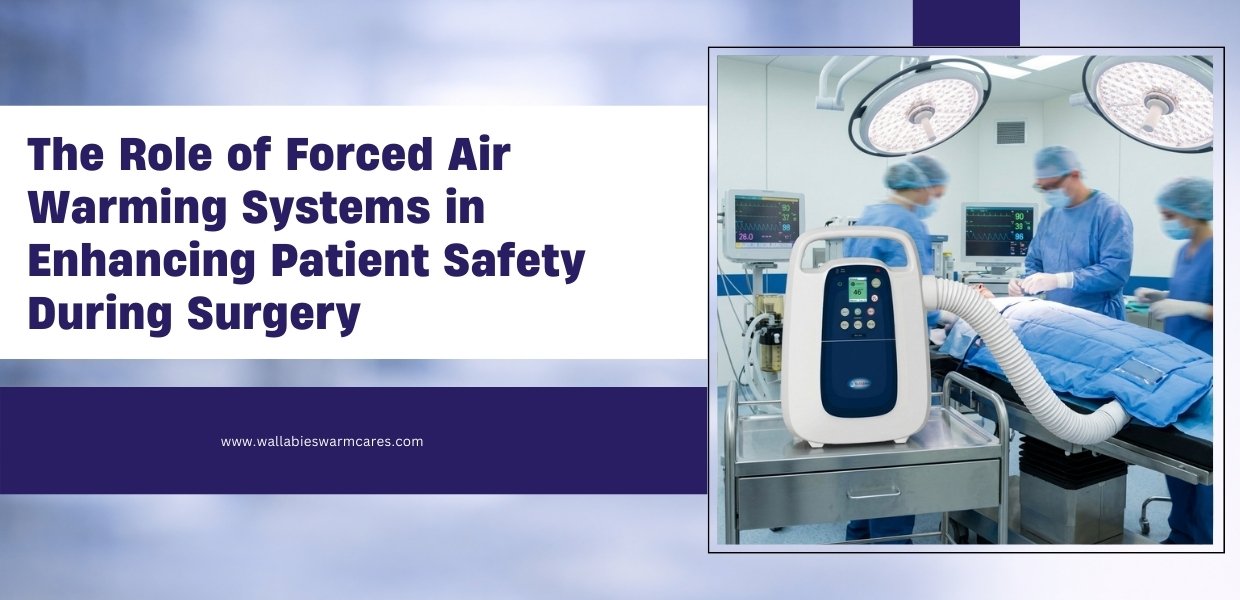
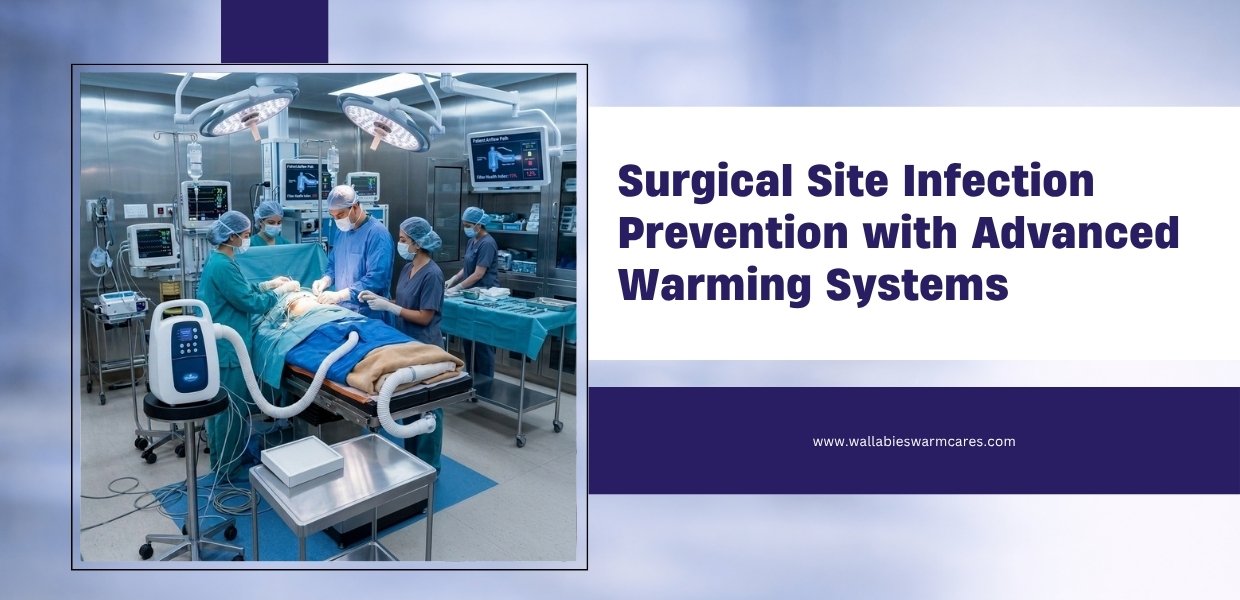
A separate but complementary warming technology. A forced air warming machine actively delivers heated air through a disposable surgical warming blanket connected via a hose directly to the patient. Used alongside a blanket warmer cabinet, this system provides active temperature management during surgery and recovery.
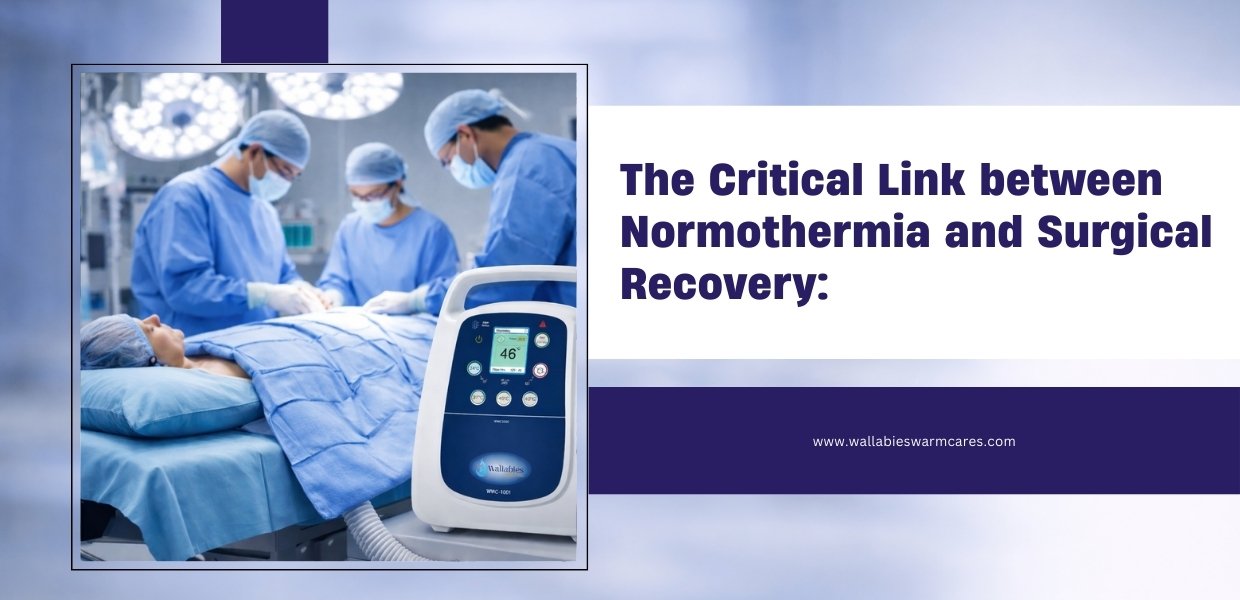
At Wallabies Warm Care, our Forced Air Patient Warming Machine and compatible warming blankets are engineered specifically for perioperative use in operating rooms and ICUs, supporting complete patient temperature management from pre-op through recovery.
5. IV Fluid and Blood Warmer
Warms intravenous fluids and blood products before they are administered directly into the patient’s bloodstream. Cold fluids can cause rapid drops in core body temperature, especially during major surgery. A blood and fluid warmer complements the blanket warmer machine by managing internal as well as external temperature.
Key Features to Look for in a Blanket Warmer Machine
When procuring a blanket warmer machine for your hospital or surgical centre, evaluate the following critical criteria:
- Temperature range and precision: The machine should offer a reliable, adjustable temperature range (typically 40°C–65°C) with a digital display and safety cutoffs to prevent overheating of linens or fluids.
- Even heat distribution: Convection technology ensures all blankets stored in the cabinet are heated evenly, eliminating cold spots and ensuring consistent warming performance.
- Capacity: Choose a cabinet size appropriate for your department’s patient volume from compact single-bay units for smaller recovery areas to large-capacity cabinets for high-throughput operating suites.
- Dual-compartment capability: For OR environments, a dual-compartment unit that simultaneously warms blankets and IV fluids reduces the need for multiple separate devices and streamlines clinical workflows.
- Safety features: Look for overheat protection, door alarms, and audible temperature alerts to ensure patient and staff safety at all times.
- Ease of cleaning and maintenance: Smooth interior surfaces and removable shelving make regular cleaning straightforward essential in infection-controlled clinical environments.
- Quality certification: Ensure the manufacturer holds ISO 13485 certification the international standard for medical device quality management systems.
- Mobility and placement: Freestanding models with smooth-rolling casters allow flexible positioning within OR corridors, PACU bays, and ward areas as needed.
Wallabies Warm Care: Complete Patient Warming Solutions
At Wallabies Warm Care, we are an ISO 13485-certified manufacturer of forced air patient warming systems and warming blankets, supplying hospitals and distributors across the globe. Based in Pune, India, our product range is purpose-built for the perioperative environment delivering consistent, clinically reliable patient warming at every stage of the surgical journey.
While our core product range focuses on active forced air warming technology, our systems work in complete synergy with blanket warming protocols providing the comprehensive temperature management hospitals need to achieve and maintain normothermia throughout the entire perioperative period.
Forced Air Patient Warming Machine
Our forced air patient warming machine is engineered for controlled convective warming in operating rooms, ICUs, and recovery areas. Designed for clinical efficiency and ease of use, it integrates smoothly into hospital workflows without disrupting the surgical team. Compatible with our full range of medical warming blankets for upper body, lower body, full body, paediatric, and underbody warming.
Warming Blankets
Our range of surgical warming blankets is designed for uniform, even heat delivery and maximum patient comfort during procedures. Multiple configurations allow use across all surgical specialties from standard adult procedures to neonatal and paediatric care.
Blood and Fluid Warmer
Our blood and fluid warmer supports precise temperature management during IV and blood administration working alongside blanket warming to provide complete perioperative thermal protection in high-acuity clinical settings.
To learn more or request product specifications, visit wallabieswarmcares.com or contact our team directly.
Frequently Asked Questions About Blanket Warmer Machines
What is a blanket warmer machine used for in a hospital?
A blanket warmer machine is used to heat blankets, gowns, and linens to a controlled therapeutic temperature before they are placed on patients. Its primary clinical purpose is to help prevent inadvertent perioperative hypothermia a core temperature below 36°C which increases the risk of surgical site infections, blood loss, cardiac complications, and extended recovery times.
What temperature should a hospital blanket warmer machine be set to?
Most clinical guidelines recommend setting a hospital blanket warmer between 40°C and 50°C for blankets and linens. IV fluid warming typically requires a separate chamber set to around 37°C to 41°C. Always follow your facility’s clinical protocols and the manufacturer’s recommended temperature ranges to ensure patient safety.
What is the difference between a blanket warmer machine and a forced air warming system?
A blanket warmer machine is a cabinet that stores and heats blankets and linens, which are then placed passively on the patient. A forced air warming system actively delivers heated air through a disposable warming blanket connected to a powered unit, providing continuous active warming during surgery. Both are used together in a comprehensive perioperative warming protocol.
Can a blanket warmer machine also warm IV fluids?
Yes dual-compartment blanket warmer machines are specifically designed with two independent temperature zones: one for blankets and one for IV fluids and irrigation solutions. Patient blankets and IV fluids must always be stored in separate compartments, as they require different temperature ranges and clinical standards.
How long does it take for a blanket warmer machine to heat blankets?
Most modern blanket warmer machines reach operating temperature within 20–40 minutes of start-up, depending on the unit’s capacity and specifications. Once at temperature, the cabinet maintains warmth continuously, ensuring pre-warmed blankets are always ready for immediate clinical use without waiting time.
What certifications should a blanket warmer machine have?
Look for ISO 13485 certification (medical device quality management) and compliance with relevant IEC electrical safety standards. ECRI and AORN guidelines for blanket warming equipment also provide benchmarks for clinical safety and temperature management in perioperative settings.
Which hospital departments use a blanket warmer machine most?
The blanket warmer machine is most commonly used in operating theatres, pre-operative holding areas, post-anaesthesia care units (PACU), ICUs, emergency departments, and neonatal units. Any clinical setting where patients are at risk of heat loss or require comfort warming benefits from a dedicated hospital blanket warmer.
Conclusion
A blanket warmer machine is a simple yet clinically powerful tool that every hospital and surgical centre should have as part of its patient warming protocol. From pre-operative comfort to intraoperative temperature maintenance and post-operative recovery, pre-warmed blankets play a direct and measurable role in reducing hypothermia, lowering infection risk, and improving patient outcomes.
Choosing the right hospital blanket warmer means evaluating temperature precision, capacity, dual-compartment capability, safety features, and the quality credentials of your supply partner. As part of a complete patient warming system strategy including forced air warming and fluid warming the blanket warmer machine ensures patients are protected from the moment they arrive through to full recovery.
Wallabies Warm Care manufactures ISO 13485-certified forced air warming systems and blankets trusted by hospitals worldwide. Contact our team at wallabieswarmcares.com to explore our full patient warming range.