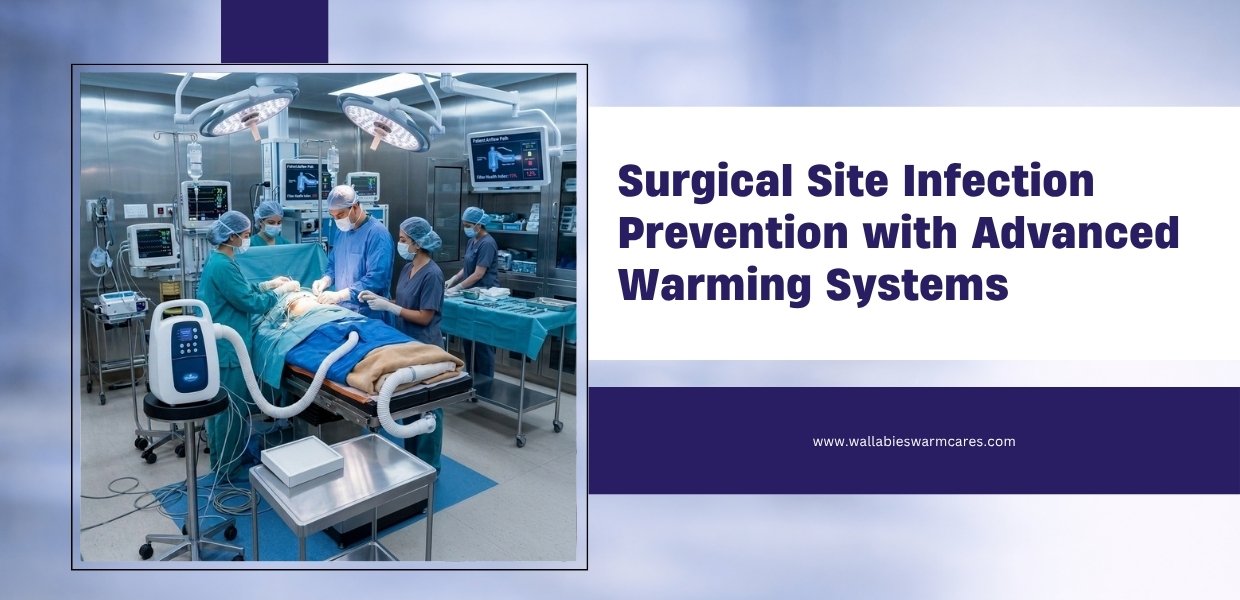
When a patient enters an operating room, their body faces a threat most people never consider: unintended hypothermia. Anaesthesia disrupts the body’s natural temperature regulation, and cold surgical environments accelerate heat loss rapidly. A hospital warmer machine is the frontline clinical solution designed to prevent this. Used across operating theatres, ICUs, and recovery units worldwide, these devices are no longer optional; they are a standard of care.
In this guide, we cover everything you need to know about hospital warmer machines: how they work, the different types available, why patient warming matters clinically, and what to look for when choosing the right system for your facility.
What Is a Hospital Warmer Machine?
A hospital warmer machine is a medical device used to maintain or restore a patient’s core body temperature during surgical procedures, critical care, and recovery. Also called a patient warming system or perioperative warming unit, it actively delivers controlled warmth to counteract the heat loss patients experience in clinical environments.
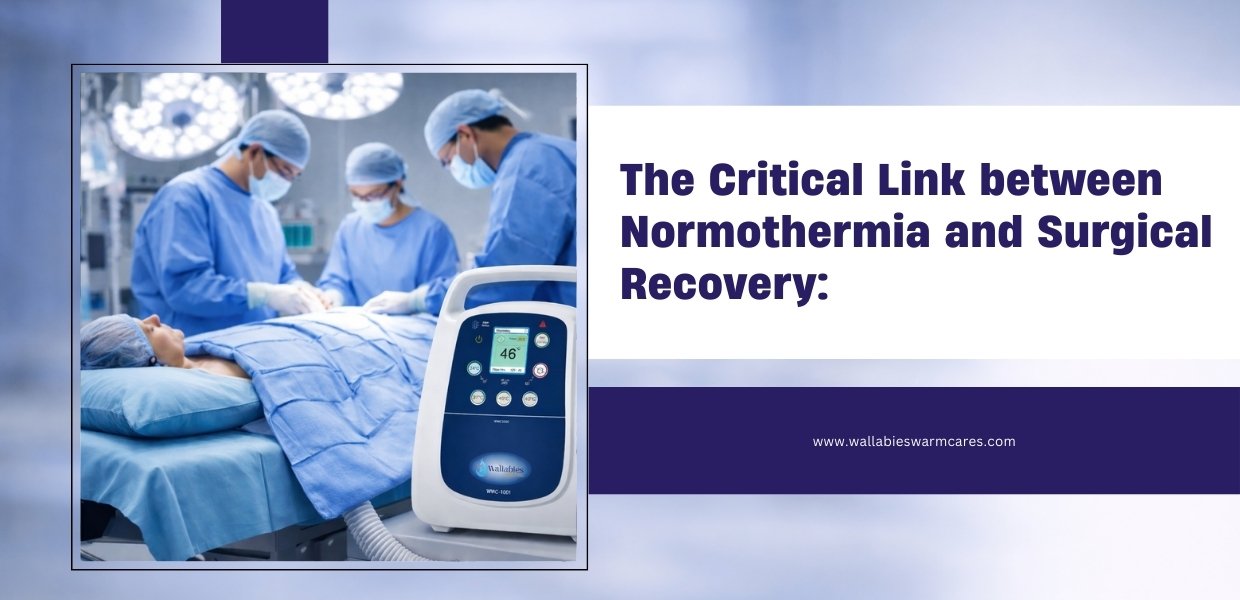
The primary goal is normothermia, keeping the patient’s core temperature within the safe range of 36°C to 37.5°C. This seemingly simple target has a profound impact on surgical outcomes, recovery time, and patient safety.
Hospital warmer machines are used across a range of clinical settings, including:
- Operating Rooms (OR) — during elective and emergency surgeries
- Intensive Care Units (ICU) — for critically ill or sedated patients
- Post-Anaesthesia Care Units (PACU) — during recovery from anaesthesia
- Emergency Departments — for trauma and hypothermic patients
- Neonatal and Paediatric Units — for newborns and young patients with high heat-loss sensitivity
Why Is Patient Warming Critical in Hospitals?
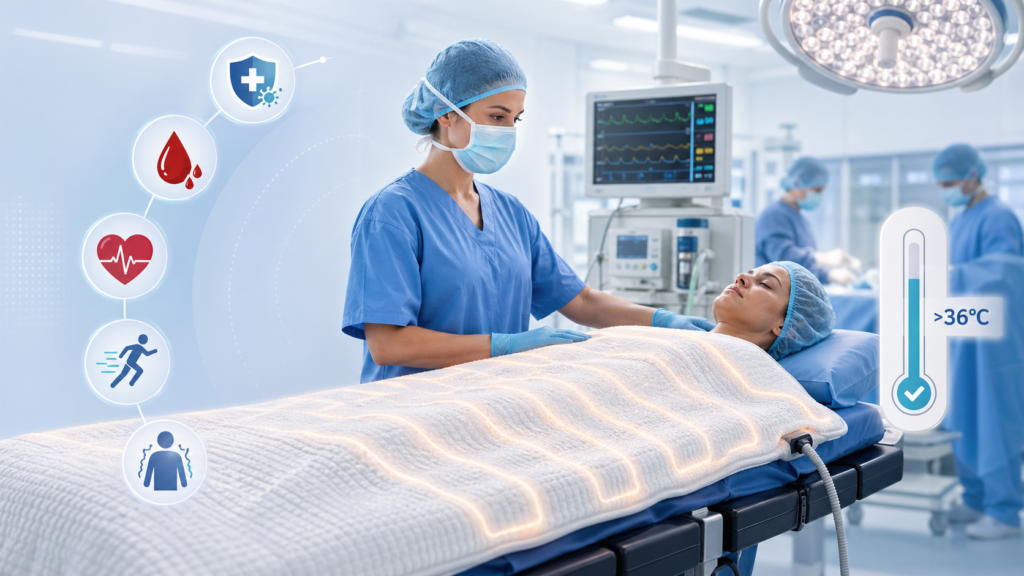
Perioperative hypothermia, a core body temperature below 36°C, affects a significant percentage of surgical patients globally. It is one of the most common and preventable complications in surgery, yet it remains under-managed in many facilities.
The clinical risks of hypothermia are well-documented and serious:
- Increased surgical site infections due to impaired immune response
- Higher blood loss caused by disrupted platelet function
- Cardiac complications, including arrhythmias and cardiovascular strain
- Prolonged PACU stays and delayed recovery from anaesthesia
- Greater risk of post-operative shivering, nausea, and discomfort
Pre-warming, warming the patient before anaesthesia induction, is now recognised by leading clinical bodies as a practical and effective intervention. In clean surgical procedures, pre-warmed patients have been shown to experience significantly lower rates of wound infection compared to those who were not warmed. A hospital warmer machine makes this standard of care achievable for every patient, every procedure.
How Does a Hospital Warmer Machine Work?
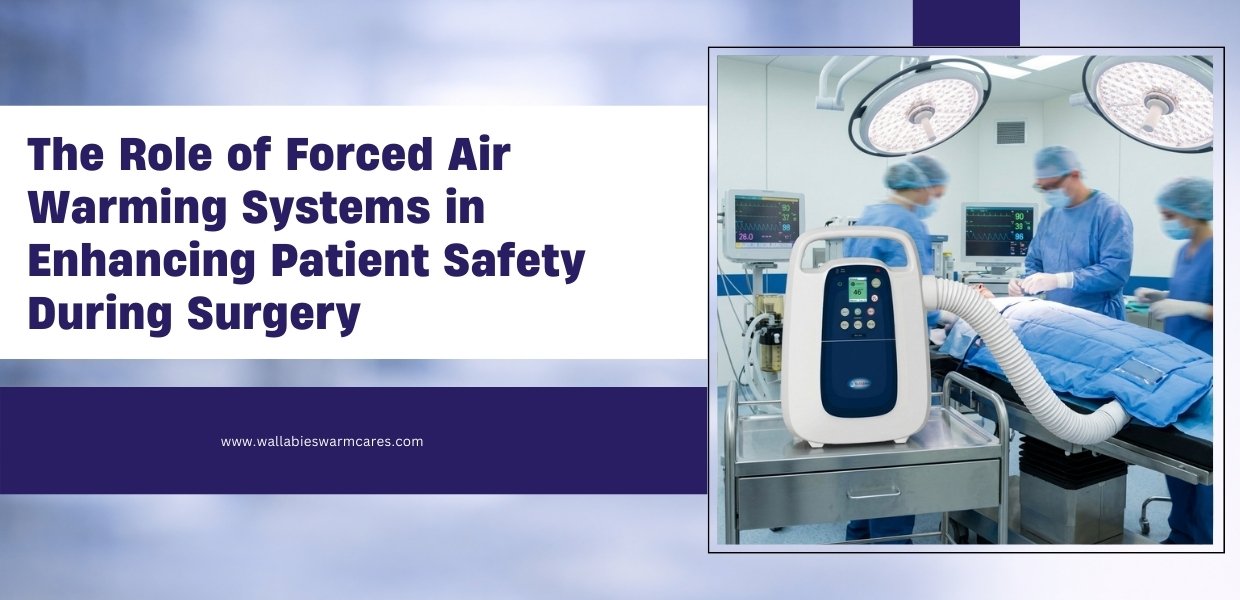
Most modern hospital warmer machines operate on the principle of forced air warming (FAW), also known as convective warming. Here is how the process works step by step:
- Air Intake: The machine draws ambient room air through a built-in filtration system.
- Heating: The filtered air is heated to a clinically controlled temperature, typically between 32°C and 43°C, regulated by precision internal sensors.
- Delivery: Warm air is pushed through a flexible hose into a single-use warming blanket placed over or under the patient.
- Distribution: The warming blanket features thousands of micro-perforations that distribute warm air evenly across the patient’s body surface.
- Monitoring: Clinical staff control and monitor output temperature settings in real time via a digital control panel.
This convective heat transfer mechanism is far more effective than passive methods such as cotton blankets, because it actively counteracts the conductive and convective heat loss patients experience in temperature-controlled hospital environments.
Types of Hospital Warmer Machines
Not all warming systems work the same way. Understanding the different types helps procurement teams and clinical staff choose the most appropriate solution.
1. Forced Air Warming Machines
The most widely used type in perioperative care. They deliver precise, controlled warm air through compatible warming blankets and are suitable for nearly all surgical specialities and patient populations. Their non-contact design reduces the risk of burns and pressure injuries.
2. Conductive Warming Systems
These use electrically heated blankets, mattresses, or pads placed in direct contact with the patient. They offer effective localised or full-body warming and are well-suited for patients in specific surgical positions.
3. Fluid and Blood Warmers
Designed to warm intravenous fluids and blood products before administration. Essential in major surgeries and trauma care, where large volumes of cold fluids would otherwise cause a significant drop in core body temperature.
4. Radiant Warmers
Primarily used in neonatal and paediatric care, radiant warmers deliver overhead infrared heat to keep newborns warm while allowing full clinical access for procedures.
5. Warming Cabinets
Used for pre-warming blankets and IV fluids before patient contact. A standard feature in operating suite corridors and pre-operative areas for patient comfort and preparation.
Wallabies Warm Care: Engineered for Clinical Reliability
At Wallabies Warm Care, we manufacture ISO 13485-certified forced air patient warming machines and compatible warming blankets designed for consistent, reliable performance in surgical and critical care environments. Based in Pune, India, we serve hospitals and distributors worldwide.
Our product range is built around one principle: every patient deserves stable, safe, and comfortable warmth — from pre-operative preparation through to full recovery.
Forced Air Patient Warming Machine
Our hospital warmer machine is engineered for controlled convective warming in operating rooms, ICUs, and recovery areas. Designed for simplicity and clinical efficiency, it integrates smoothly into existing hospital workflows with minimal training required.
Warming Blankets
Each blanket in our range is designed for uniform warm air distribution, maintaining patient comfort while preserving full clinical access during procedures. Available in multiple configurations to serve diverse surgical specialities.
Blood and Fluid Warmer
Our fluid warming solution supports temperature management during IV and blood administration — helping reduce heat loss in high-acuity settings where large fluid volumes are involved.
Explore our full product range at wallabieswarmcares.com or contact our team to request detailed product information for your facility.
Frequently Asked Questions About Hospital Warmer Machines
What is a hospital warmer machine used for?
A hospital warmer machine is used to maintain a patient’s core body temperature during surgery, recovery, and critical care. It prevents perioperative hypothermia — a common and serious complication that can increase the risk of infections, blood loss, and prolonged recovery times.
How does a forced-air warming machine work?
A forced air warming machine draws in ambient air, heats it to a controlled temperature, and pushes it through a specially designed warming blanket placed over the patient. The blanket distributes warm air evenly across the body surface, maintaining stable normothermia throughout the procedure.
Which departments use a hospital warmer machine?
Hospital warmer machines are used in operating theatres, ICUs, post-anaesthesia care units (PACU), emergency departments, neonatal intensive care units (NICUs), and labour and delivery suites. Essentially, any clinical setting where patients are at risk of heat loss benefits from active patient warming.
Is a hospital warmer machine safe for paediatric patients?
Yes. When operated according to manufacturer guidelines, forced air warming machines are safe for adult, paediatric, and neonatal patients. Clinical staff should select the appropriate blanket size and configuration based on the patient’s size and the procedure type.
What is the difference between a patient warmer and a fluid warmer?
A patient warmer heats the body surface through convective or conductive airflow using a warming blanket. A fluid warmer heats IV fluids and blood products before they are administered directly into the bloodstream. Both may be used simultaneously during major surgical procedures to comprehensively manage patient temperature.
What certifications should I look for in a hospital warmer machine?
Look for ISO 13485 certification, which confirms the manufacturer follows quality management systems specific to medical device production. Compliance with IEC 60601-1 (general electrical safety) and IEC 60601-1-2 (electromagnetic compatibility) are also an important indicator of a reliable device.
How often should a hospital warmer machine be serviced?
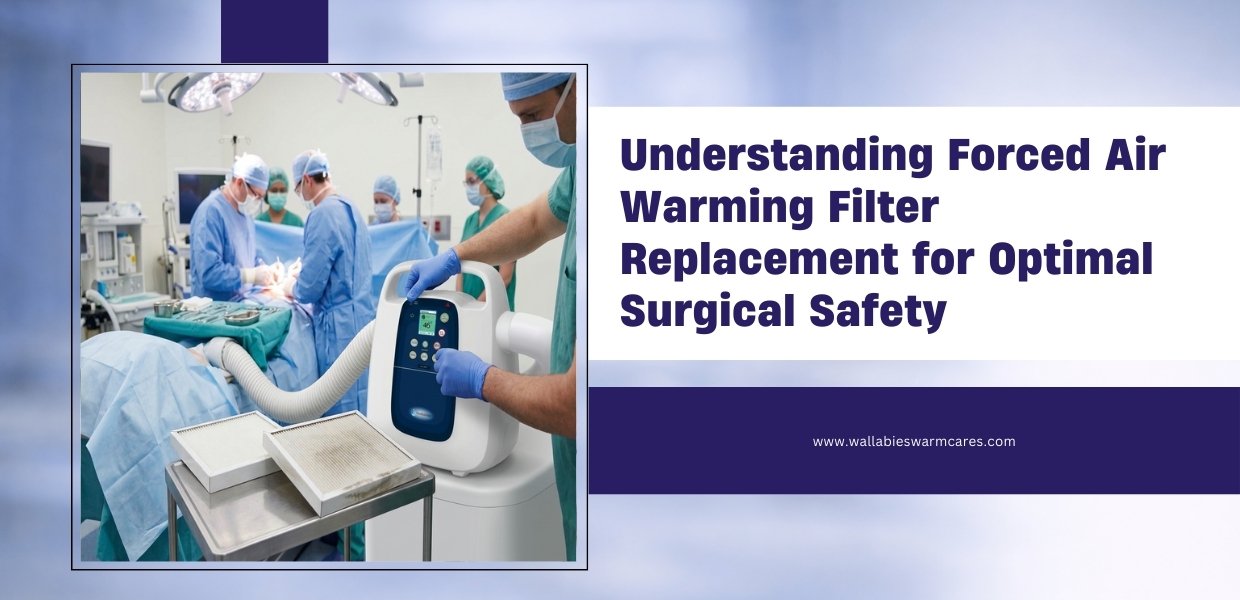
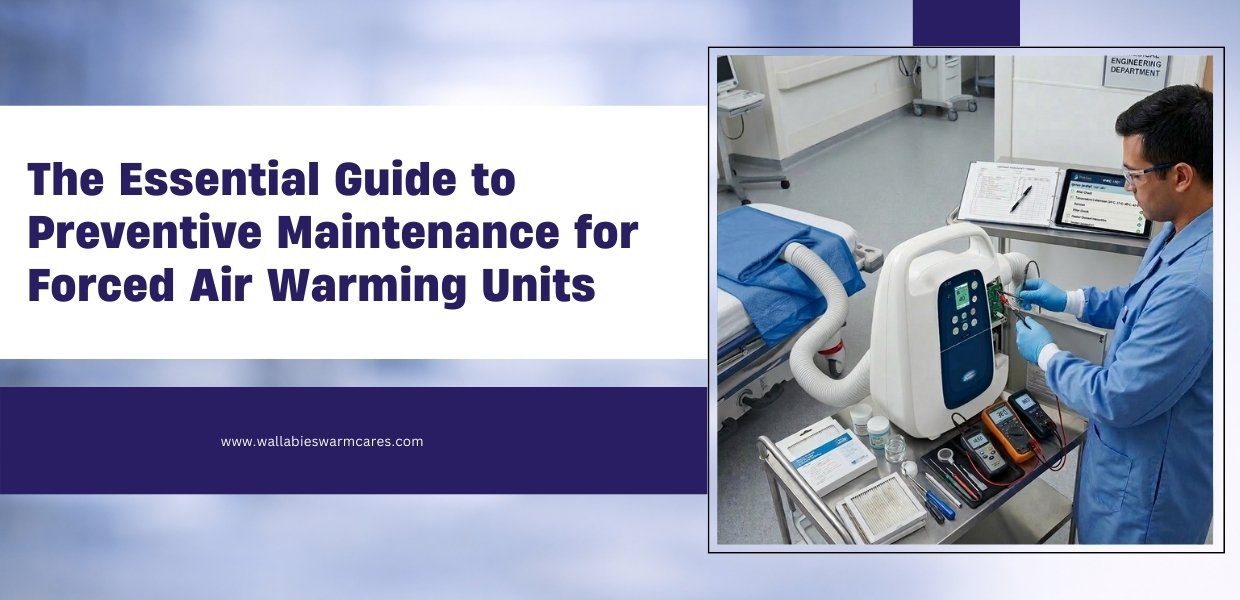
Service intervals depend on the manufacturer’s recommendations. Typically, filters should be inspected regularly and replaced every 6 to 12 months, while the device should undergo full preventive maintenance annually. Always follow the specific maintenance schedule provided in the device’s user manual.
Conclusion
A hospital warmer machine is one of the most clinically important devices in modern healthcare. Whether in the operating theatre, the ICU, or the recovery suite, maintaining patient normothermia reduces complications, shortens recovery times, and improves overall outcomes.
Choosing the right warming system means evaluating quality standards, technical specifications, blanket compatibility, ease of use, and the reliability of your supply partner. With a commitment to quality manufacturing, global supply capability, and a clinically focused product portfolio, Wallabies Warm Care is trusted by hospitals worldwide to deliver consistent, validated patient warming solutions.