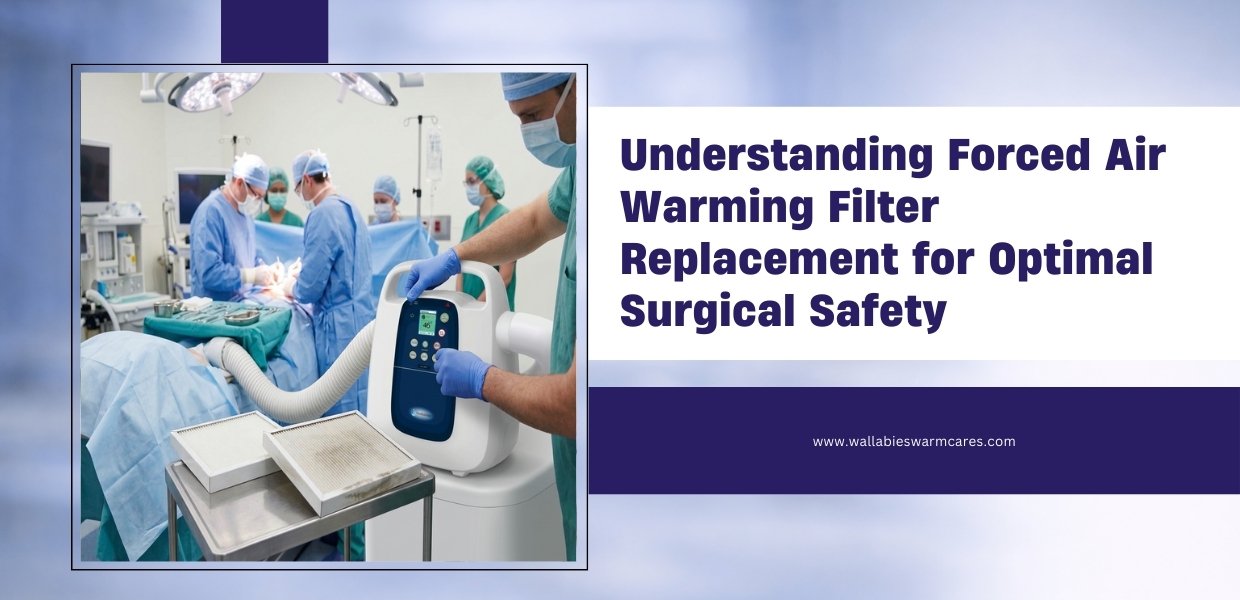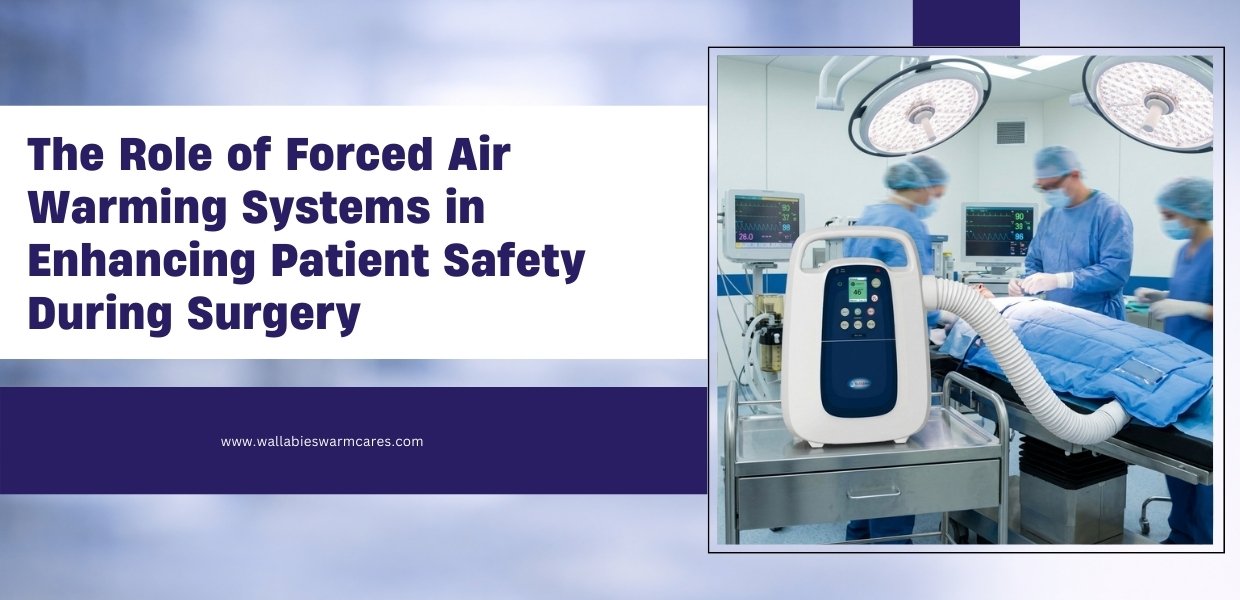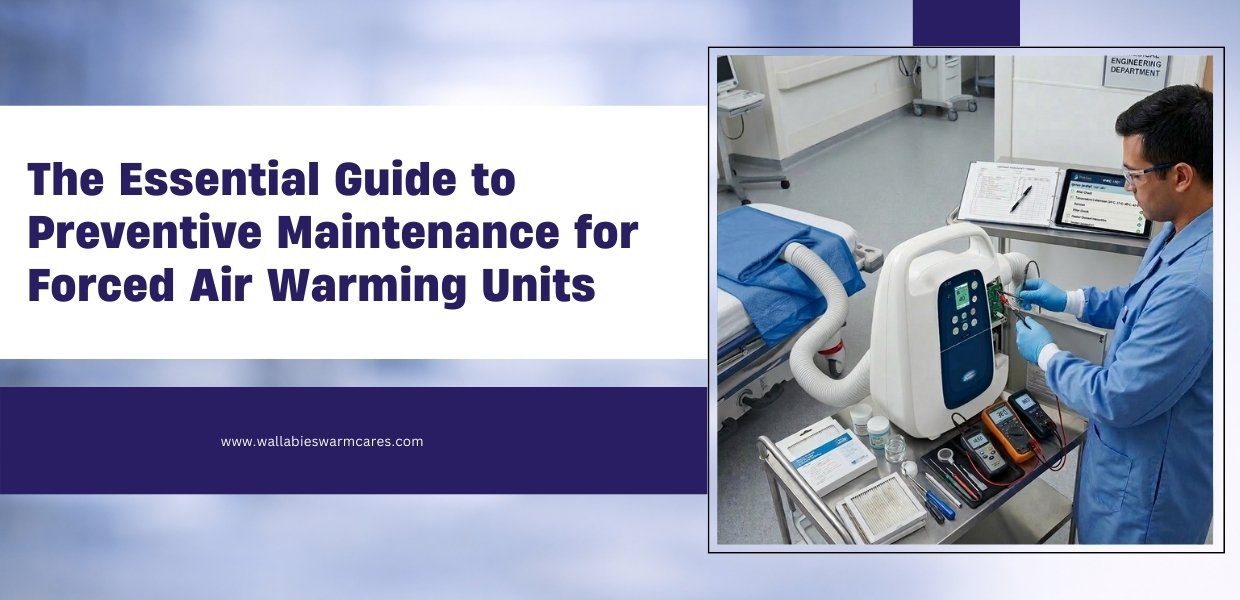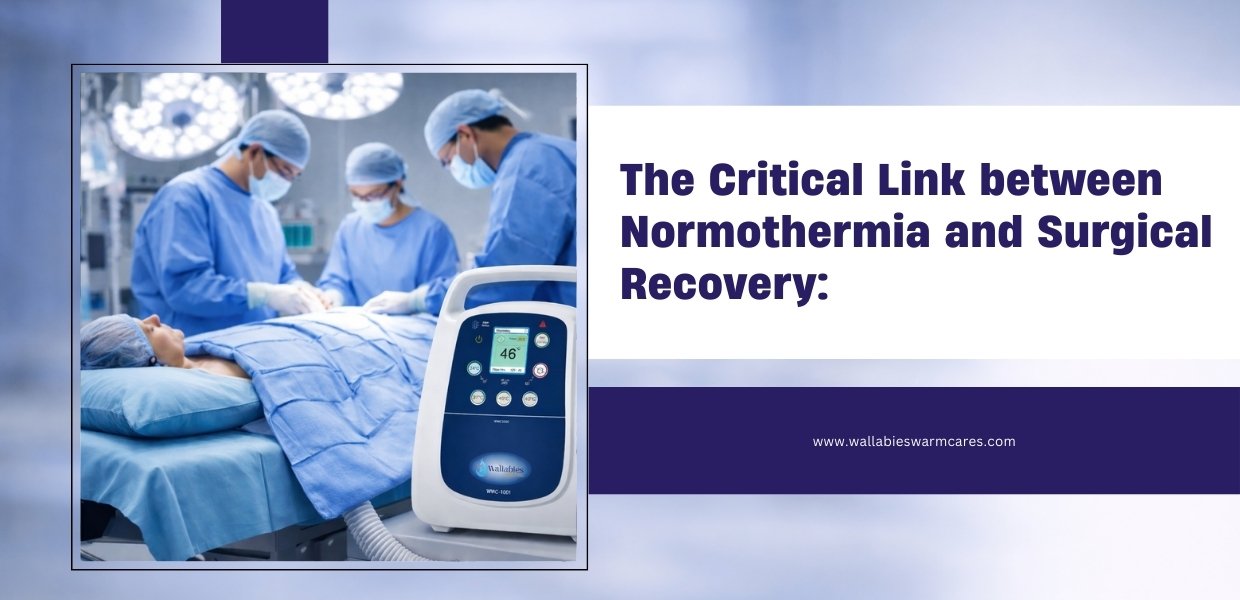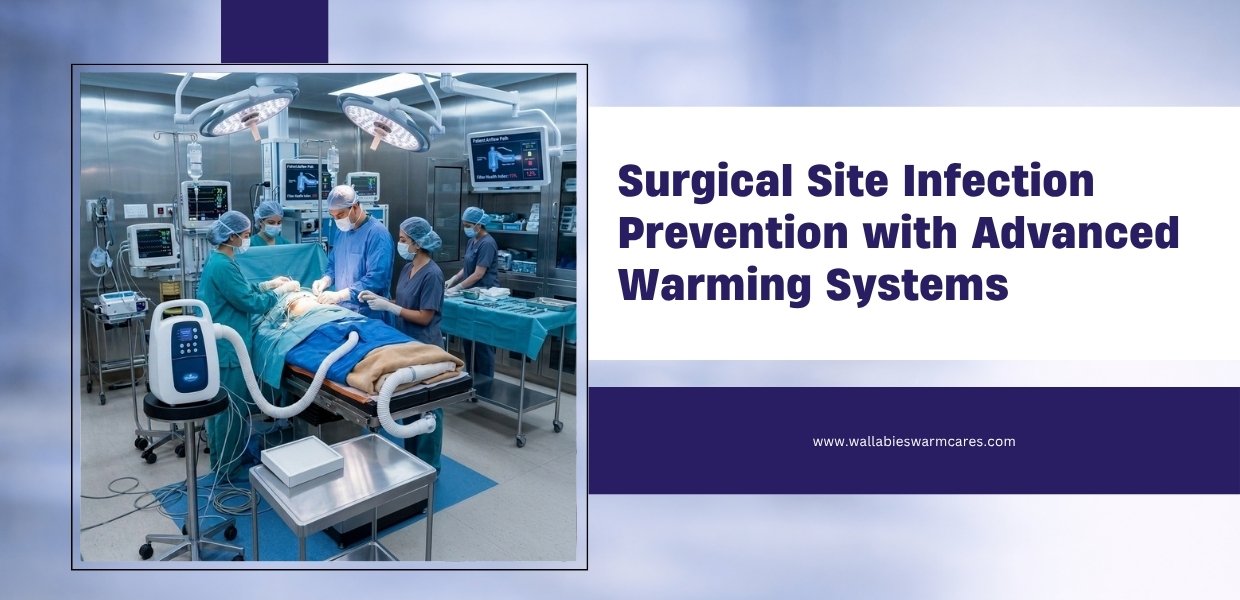
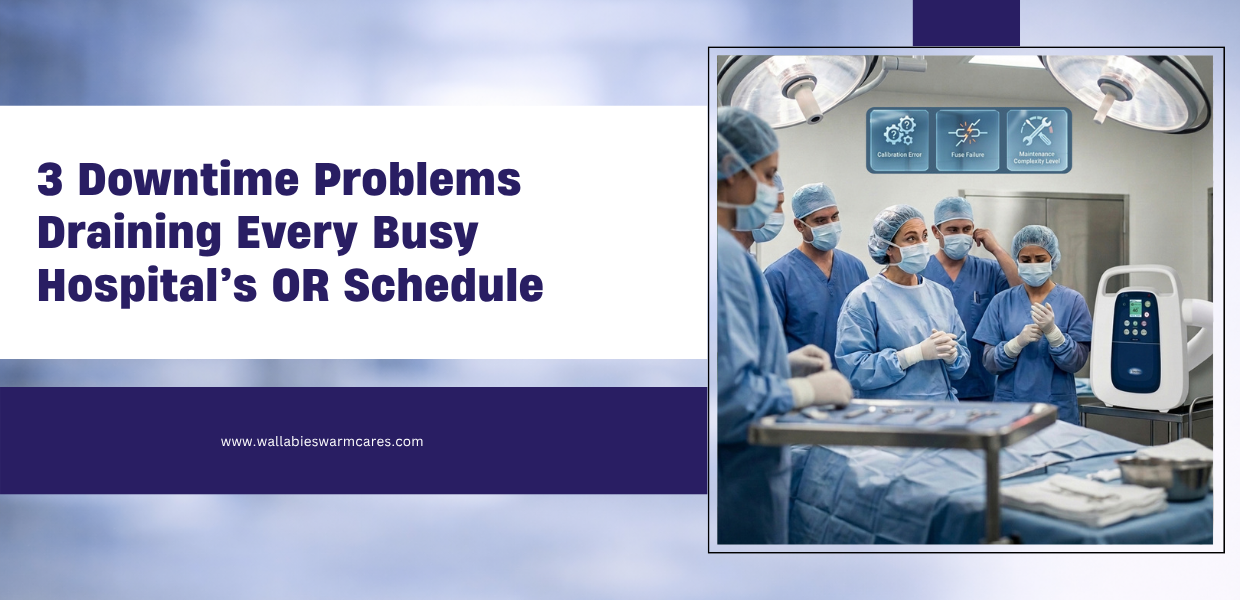
In surgical environments where patient outcomes hinge on thermal precision, a forced air warming machine is not an optional accessory; it is frontline equipment. When one goes offline mid-schedule, the impact is immediate: delayed procedures, disrupted workflows, and patient safety risks that no OR manager wants to navigate. Yet across hospitals in India, Europe, and the United States, the most common causes of patient warming system downtime are not hardware failures. They are design-driven, built into machines engineered without the operational realities of busy clinical floors in mind.
This blog breaks down three hidden downtime problems that plague traditional warming equipment, and why the engineering choices behind your next procurement decision matter far more than most buyers realise.
Why Perioperative Hypothermia Makes Warming Equipment Non-Negotiable
Perioperative hypothermia, defined as a core body temperature falling below 36°C, remains one of the most common and preventable surgical complications globally. Even a mild 1–2°C drop triples the risk of surgical site infection, increases intraoperative blood loss, delays recovery, and extends hospital stays. Patients undergoing procedures lasting more than 30 minutes, elderly patients, and those undergoing major abdominal or orthopaedic surgeries face the highest risk. Active forced air warming counteracts this by delivering controlled convective heat through a hose and blanket system, maintaining normothermia from pre-op through post-anaesthetic recovery. AORN, NICE, and ERAS guidelines all mandate proactive surgical temperature management as part of standard perioperative care. That mandate makes every warming machine a mission-critical asset, and every hour it sits offline — for calibration, servicing, or fuse replacement a measurable clinical and financial risk.
Problem 1: Calibration Sends the Forced Air Warming Machine Off the Floor
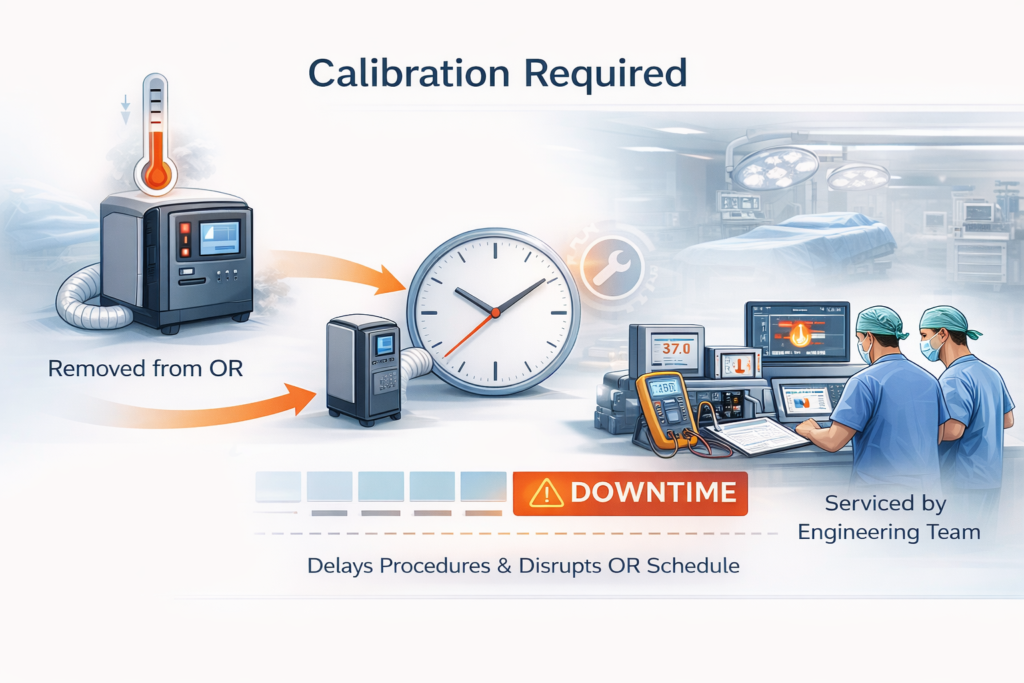
Traditional warming units rely on sensors that require periodic recalibration. Over time, analogue or externally mounted temperature sensors drift, producing inaccurate readings that either compromise patient safety when undetected or cause unnecessary hospital equipment downtime when caught during routine audits.
Recalibration means the unit must be removed from the clinical floor, passed to a biomedical engineering team, validated against a reference standard, and returned only after sign-off. In high-throughput hospitals running 15–30 surgical procedures daily, this is not a minor inconvenience. It is hospital equipment downtime measured in lost OR slots, and in many facilities, it repeats on a regular scheduled cycle for every unit in the fleet.
The solution already exists: digital sensors embedded directly in the air hose. Positioned closer to the actual airflow path, these sensors deliver more accurate temperature readings than analogue alternatives, and they do not require end-user calibration at any point in the machine’s service life. No biomedical technician needed. No scheduled downtime. The forced air warming machine stays on the floor, every shift, every day. For hospitals in India managing lean biomedical teams across large ward footprints, or European facilities held to strict uptime standards under national healthcare frameworks, eliminating the calibration cycle removes an entire category of avoidable downtime that most procurement teams never account for when choosing a patient warming system.
Problem 2: Complicated Fuse Replacements Halt Patient Warming System Use
The second source of avoidable downtime is the fuse. In conventional patient warming system designs, the fuse is buried inside the unit housing, accessible only through partial or full disassembly. Replacing it is a job that requires a biomedical engineer, the correct tools, and time that the OR floor simply does not have during an active surgical day.
Fuse failures happen without warning. When they do, the effect on surgical temperature management is immediate: the warming machine shuts down, the warming blanket goes cold, and the clinical team must manage perioperative hypothermia risk manually, neither an acceptable nor a safe situation in a busy OR or ICU environment.
A dual-stage fuse system addresses this problem entirely. By housing both a working fuse and a standby fuse in an externally accessible compartment, the replacement can be performed by trained nursing staff in under two minutes without disassembling the unit, without specialist tools, and without moving the machine off the clinical floor.
This is not simply a design convenience. In perioperative care, where temperature continuity is clinically critical, a machine whose fuse can be swapped at the bedside is a genuinely safer machine. For procurement teams evaluating patient warming systems for district hospitals in India, community hospitals across Europe, or ambulatory surgical centres in the United States, this single engineering feature redefines what reliable actually means in practice, not on a spec sheet, but on the OR floor at 7 AM.
Problem 3: Maintenance Complexity Drives Dependence on Specialist Support
Beyond calibration and fuse access, many conventional warming units carry a broader maintenance architecture that assumes specialist support is always nearby. In large urban teaching hospitals, that assumption may hold. In mid-sized surgical centres, particularly across Tier 2 and Tier 3 cities in India, or regional hospitals in Europe, it frequently does not.
The result is a recurring cycle of hospital equipment downtime driven not by device failure, but by access to trained personnel. Machines are taken offline because a biomedical technician is unavailable. Surgical schedules are reorganised because no one on the floor can resolve a routine issue without calling for specialist support. The forced air warming machine sits idle in a storeroom while its warming blankets go unused.
Every hour of unnecessary downtime is an hour the patient warming system is not doing its job. An operating room runs at a cost of thousands per hour in direct and indirect overheads. This is not only a clinical issue, it is a financial and operational one that compounds across multi-OR facilities at scale. The direction the market is moving is clear: hospitals in India, Europe, and North America need patient warming systems designed for on-site maintenance by available ward staff without complex disassembly, without manufacturer intervention for routine issues, and without calibration demands that require specialist sign-off. Procurement teams should be asking directly whether the units they are evaluating have made that engineering choice.
Choosing a Patient Warming System Built for Operational Reality
When evaluating a forced air warming machine for procurement, most checklists focus on clinical performance: temperature range, warm-up speed, HEPA filtration efficiency, and blanket compatibility. These are the right criteria. They are not, however, sufficient.
The questions that separate reliable machines from problematic ones in real hospital use are maintenance questions:
- Does the unit require end-user calibration, or does it use digital sensors in the hose?
- Can the fuse be replaced without disassembling the unit?
- Can trained nursing staff resolve a fuse failure in under two minutes?
- What is the realistic frequency of biomedical engineer intervention for routine servicing?
Perioperative hypothermia is a preventable complication. The forced air warming machine designed to prevent it should itself be designed to prevent its own unnecessary downtime through smarter sensing, more accessible servicing, and fewer single points of failure that pull critical equipment from clinical use at the worst possible moment.
At Wallabies Warm Care, our forced air warming machine is engineered for hospital-grade uptime. Digital sensors in the air hose eliminate the need for end-user calibration. Our dual-stage fuse system allows on-site fuse replacement without disassembling the units, so the machine that leaves the production floor stays on the clinical floor. Because the patient warming system that never goes offline is the one that keeps your patients safe.
Learn more about our forced air warming machine features and how it is built for the operational demands of busy surgical environments. For clinical background on perioperative hypothermia prevention guidelines, the AORN provides evidence-based standards used across operating rooms worldwide.